











Solubilization Technology for Poorly Water-Soluble Functional Ingredients ― An Approach to Improving Bioavailability and Transparency ―
Share
Driven by increasing health consciousness, the market for health supplements, including foods with functional claims, continues to expand. Consumer interest is growing in products containing proteins, ingredients for locomotive syndrome support, vitamins, polyphenols, and other functional compounds.
However, many functional ingredients exhibit poor water solubility and are not readily absorbed in the gastrointestinal tract, limiting their ability to deliver their intended benefits. In this article, we introduce our solubilization technology utilizing surfactants and carbohydrates to improve the water solubility of poorly water-soluble ingredients.
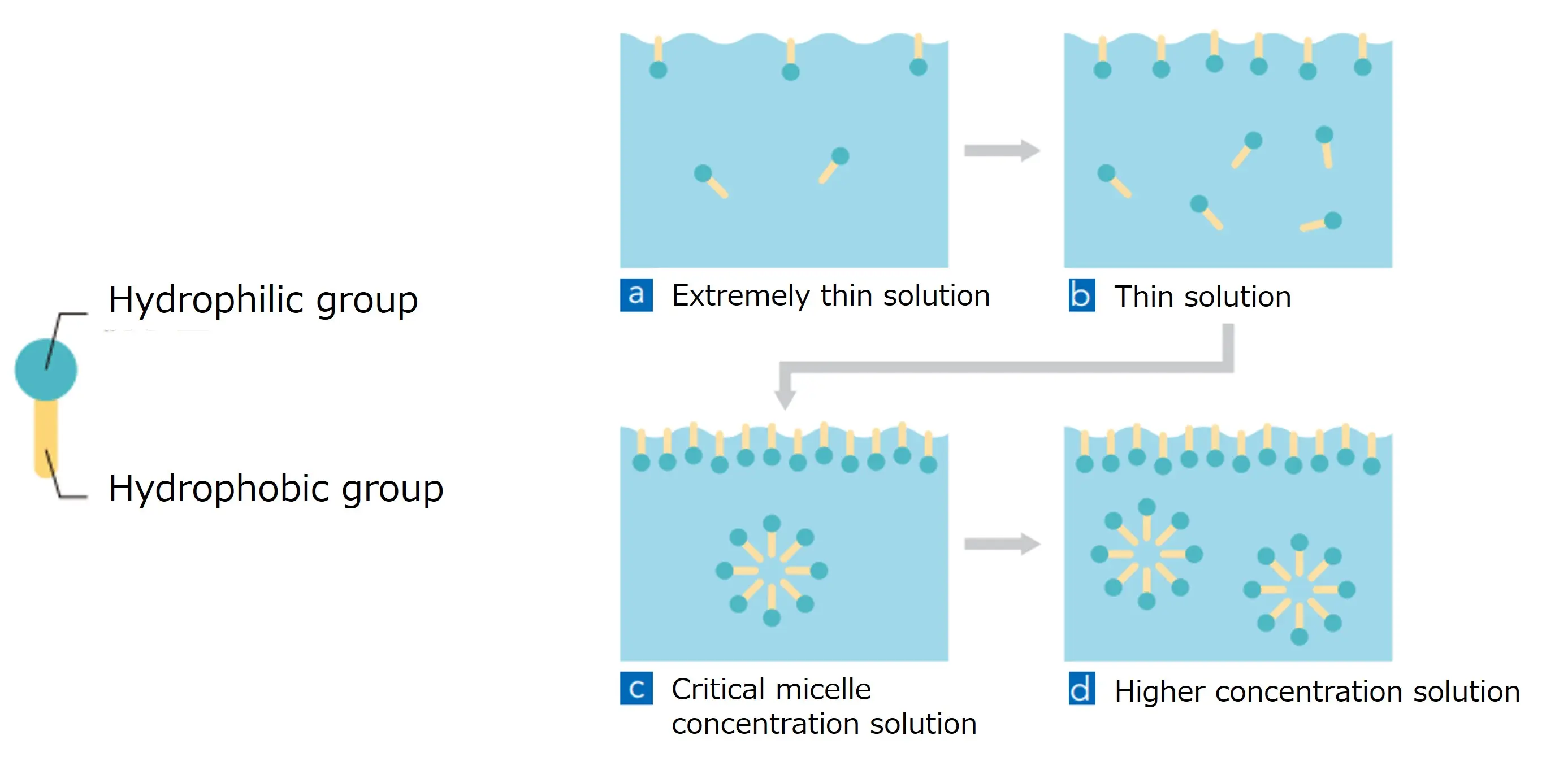
Surfactants are amphiphilic compounds that contain both hydrophobic (lipophilic) and hydrophilic moieties. Owing to this unique structure, they exhibit various functions such as emulsification, dispersion, and foaming.
At low concentrations in aqueous solutions, surfactant molecules primarily adsorb at interfaces. As the concentration increases, the molecules aggregate and form structures known as micelles. The concentration at which micelles begin to form is called the critical micelle concentration (CMC).
When hydrophobic compounds are added to a system in which micelles have formed, these compounds can be incorporated into the micellar core, appearing to dissolve in water. This phenomenon is referred to as solubilization.
Four poorly water-soluble ingredients were selected as model ingredients: cannabidiol (CBD), β-caryophyllene (BCP), genistein (an isoflavone), and 5,7-dimethoxyflavone (a flavone derivative). All of these compounds exhibit extremely low water solubility.
Sucrose fatty acid esters (SE), one of our products, were used as solubilizing agents. Additional ingredients, such as carbohydrates, were incorporated when necessary to optimize solubilization performance.
Solubility was evaluated based on the visual appearance of the solutions and the presence or absence of turbidity.
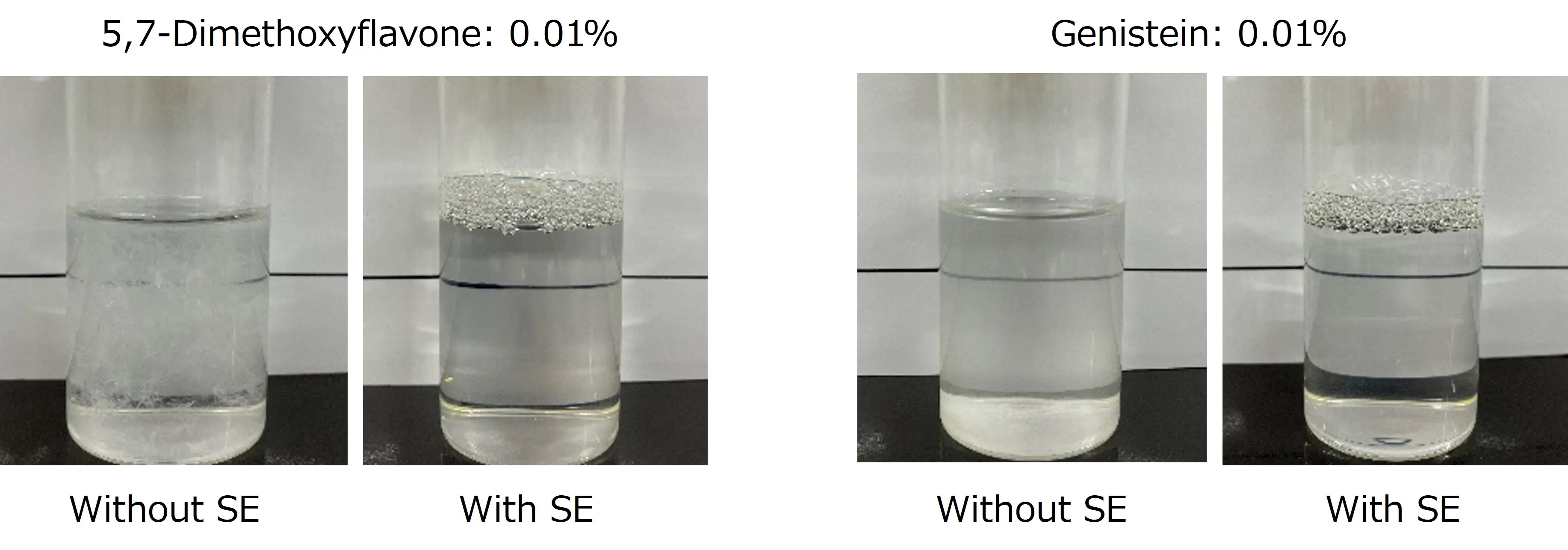
Aqueous solutions containing 0.1 wt% CBD or BCP and 0.01 wt% 5,7-dimethoxyflavone or genistein were prepared and maintained at 25°C for 1 hour before visual inspection.
As a result, all solutions solubilized with sucrose fatty acid esters (SE) were transparent. In contrast, the control samples, in which the poorly water-soluble ingredients were added directly to water without a solubilizing agent, appeared cloudy. These results demonstrate the effectiveness of solubilization in improving solution clarity.
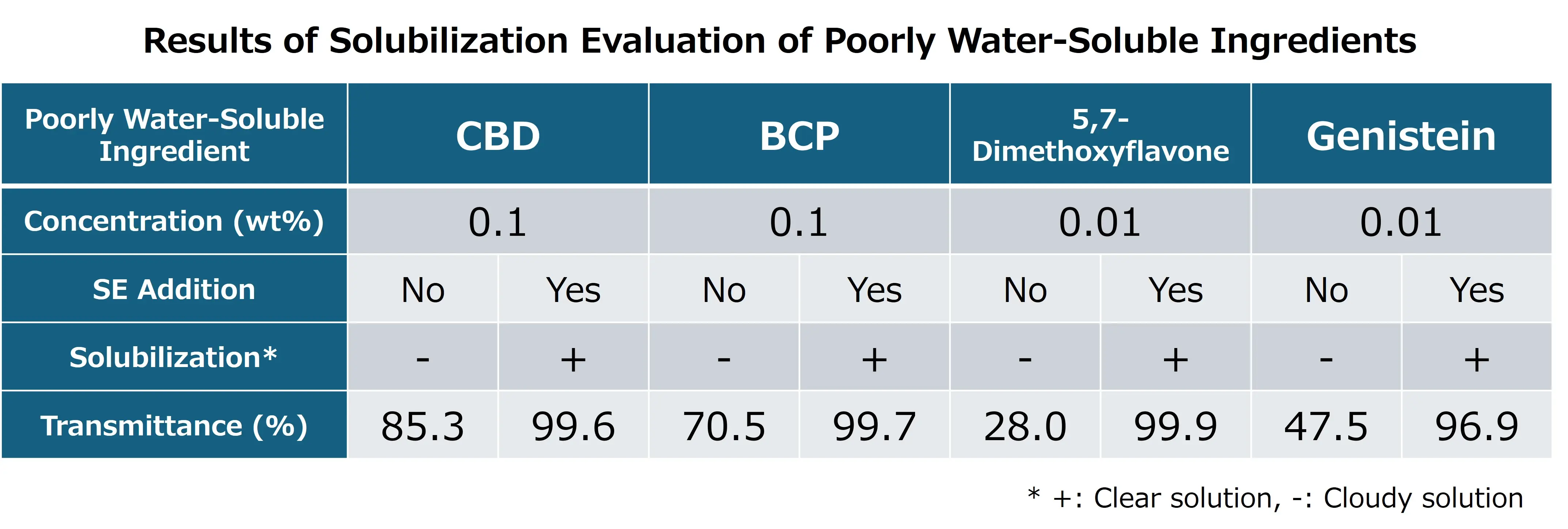
To quantitatively assess transparency, the transmittance of each aqueous solution at 660 nm was measured in accordance with the turbidity testing method specified in JIS K 0101 using a ratio-beam spectrophotometer (U-5100, Hitachi High-Tech Corporation).
The results confirmed that the use of sucrose fatty acid esters (SE) produced highly transparent solutions for all of the poorly water-soluble ingredients evaluated.
Although this study focused on CBD, BCP, genistein, and 5,7-dimethoxyflavone, many functional compounds, including polyphenols, carotenoids, and vitamins, are known to have poor water solubility.
Improving the water solubility of these ingredients may enhance their bioavailability in the body. In addition, the high transparency achieved through solubilization can contribute to improved visual quality in food and beverage applications.
We will continue to advance technologies that help address our customers' formulation challenges and support the development of innovative products.
Basic R&D Group
R&D Department
Life Sciences Headquarters
KOMORI Noriaki