











What Are Sucrose Esters? ― Benefits, Functions, and Applications ―
Share
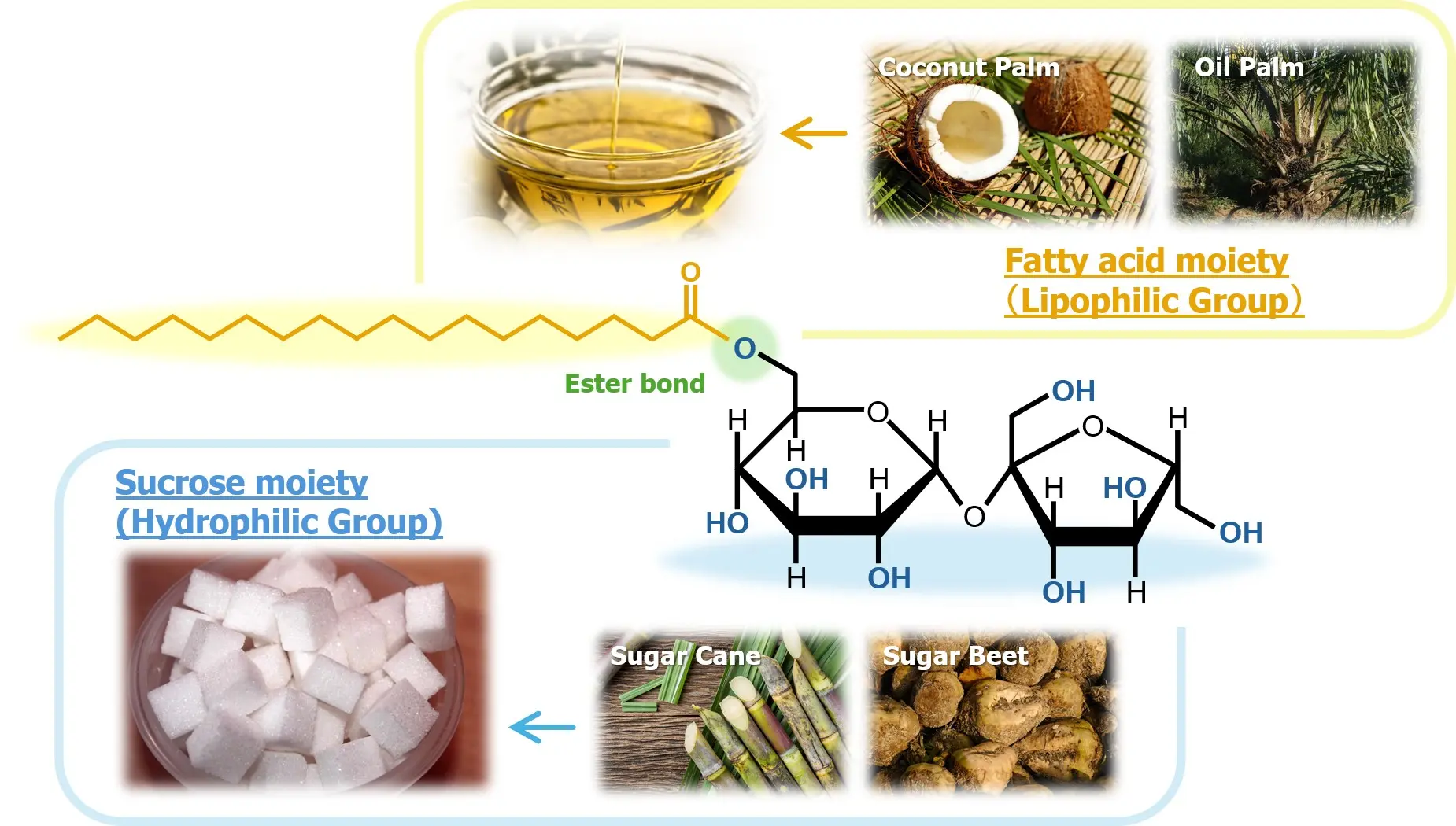
Sucrose esters, also known as sugar esters (SEs), are nonionic surfactants composed of sucrose as the hydrophilic group and fatty acids derived from vegetable oils and fats as the lipophilic group. Since their commercialization in Japan in the 1950s—the first of its kind in the world—they have been widely used primarily as food emulsifiers across a broad range of applications.
Their safety has been evaluated by the Joint FAO/WHO Expert Committee on Food Additives (JECFA), and they have been approved as food additives in many countries and regions, including Japan, Europe, and the United States. Beyond food applications, sucrose esters are also used in cosmetics, pharmaceuticals, detergents, and hygiene products, contributing to the performance and quality enhancement of a wide variety of products.
Because the production of sucrose esters requires highly advanced manufacturing technology, only a limited number of companies worldwide are capable of producing them. This rarity further enhances their value as a high-performance specialty material.
Various emulsifiers can be used as food additives, including glycerol fatty acid esters, lecithin, and sorbitan fatty acid esters. Compared with these emulsifiers, sucrose esters offer several distinctive advantages.
1. Wide HLB Design Flexibility
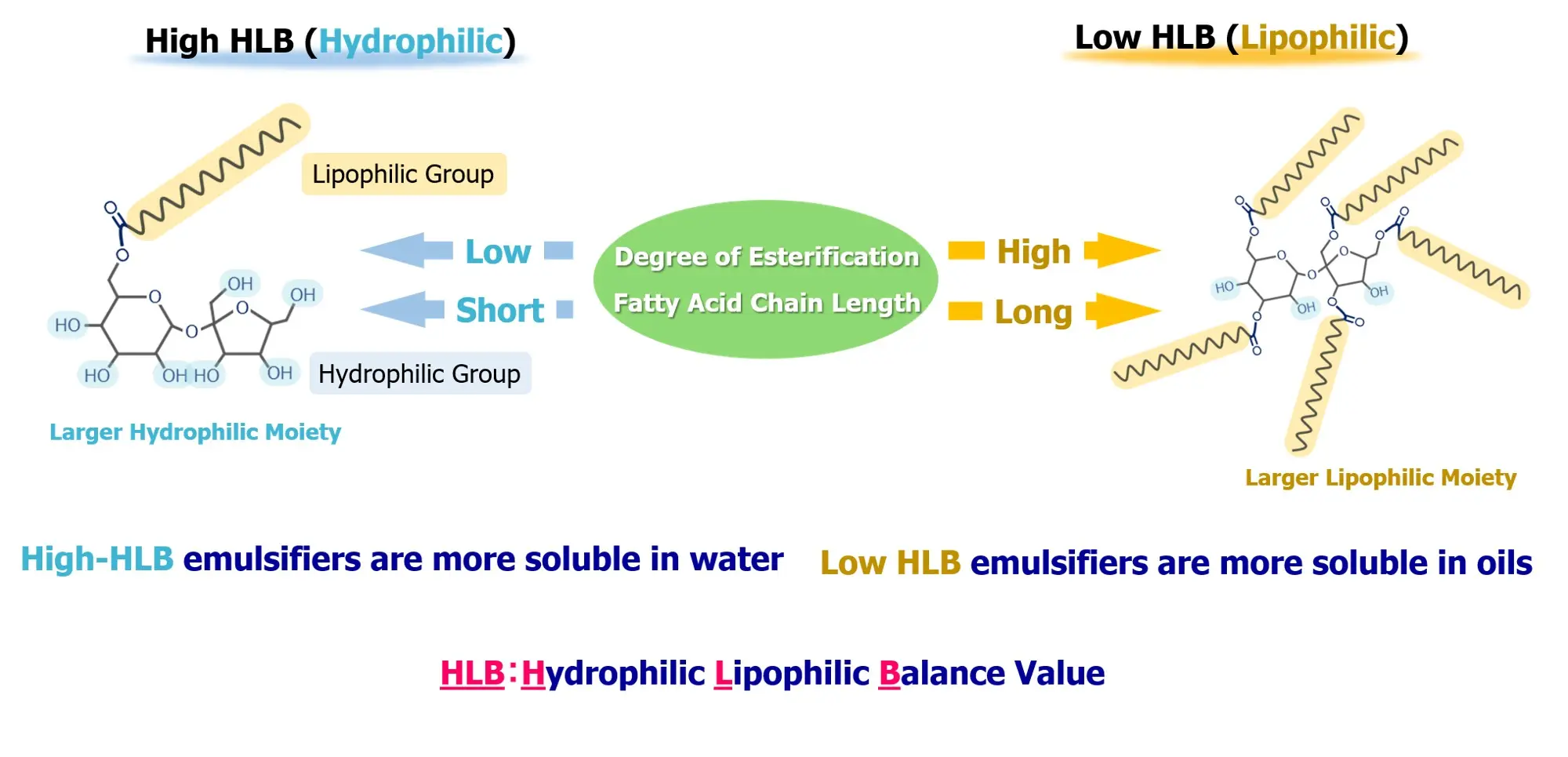
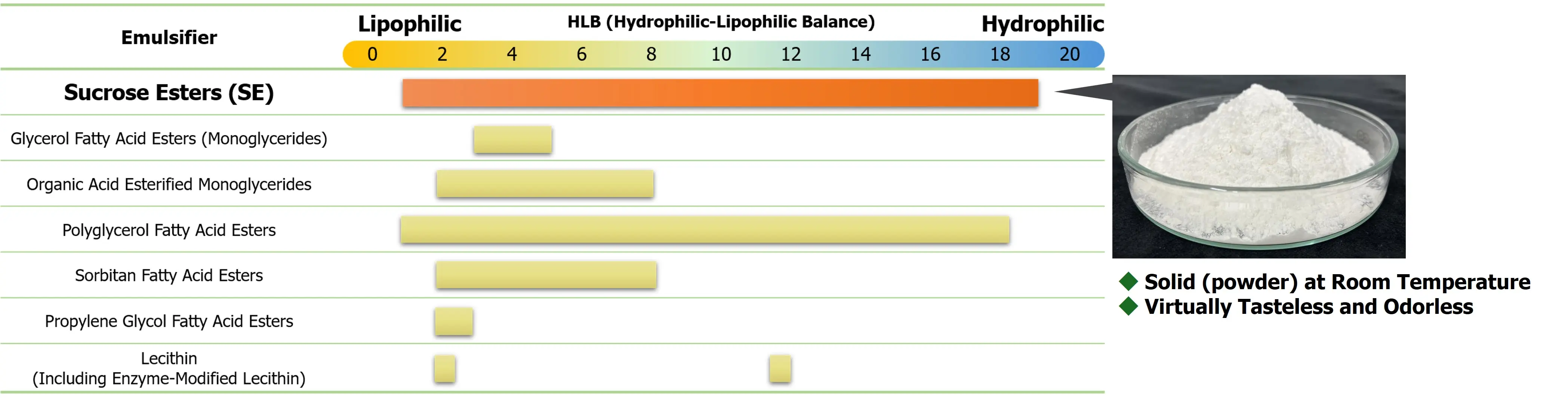
A sucrose molecule contains eight hydroxyl groups. By controlling the number and type of fatty acids attached to these groups, a wide range of HLB values can be achieved—from highly hydrophilic to highly lipophilic grades. In particular, few emulsifiers can cover the high-HLB range, making this one of the key strengths of sucrose esters.
*: HLB (Hydrophilic-Lipophilic Balance) is a measure of the relative balance between the hydrophilic and lipophilic characteristics of a surfactant. HLB values range from 0 to 20, with lower values indicating greater lipophilicity and higher values indicating greater hydrophilicity.
2. Excellent Crystallinity and Ease of Handling
Sucrose esters exhibit excellent crystallinity derived from their sucrose backbone. Although their physical properties vary depending on the type of fatty acid used, the major grades based on saturated fatty acids are solid powders at room temperature, making them easy to handle and process. Furthermore, few high-HLB emulsifiers are available in solid powder form, which is another unique advantage of sucrose esters.
3. Minimal Impact on Food Flavor
The esterification of sucrose with fatty acids eliminates the inherent sweetness of sucrose, resulting in a material with virtually no taste or odor. As a result, sucrose esters can be added to foods without significantly affecting their original flavor, making them particularly suitable for products that require delicate tastes and aromas.
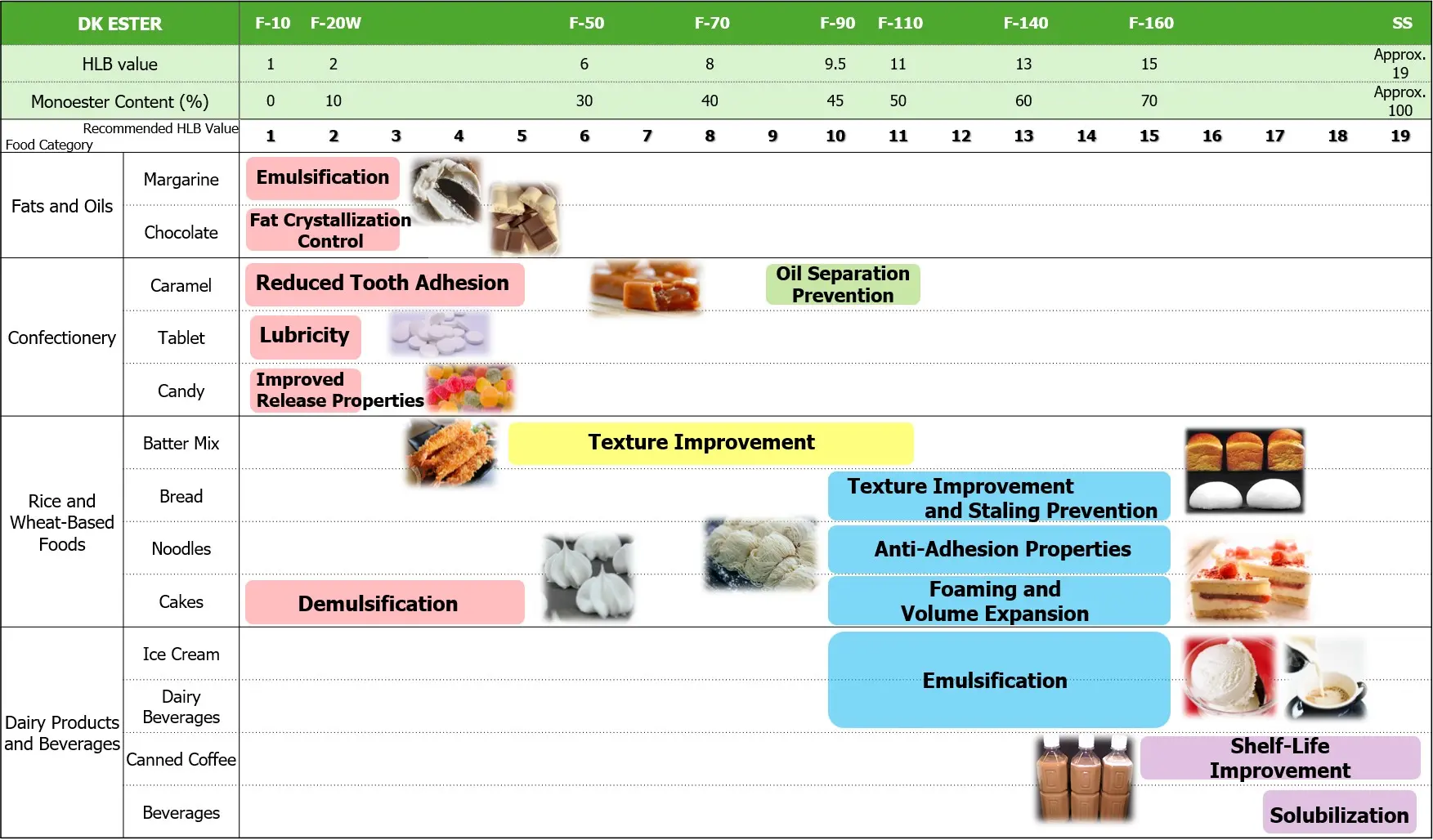
Since 1971, we have manufactured and marketed DK ESTER, our sucrose ester product line for food applications. For cosmetic applications, we offer COSMELIKE, providing solutions for a wide range of industries, from food to personal care products.
Although sucrose esters are generally recognized as emulsifiers, their functionality extends far beyond emulsification. They can enhance the solubilization of poorly soluble substances, inhibit fat crystallization, improve product quality through interactions with starch, and provide additional functions such as antimicrobial activity against heat-resistant microorganisms, foaming properties, and lubricity. These functionalities can be tailored through HLB design, enabling the selection of the optimum grade for specific requirements across various applications, including foods and cosmetics.
In addition, our sucrose ester products are certified Halal and Kosher, as well as RSPO and FSSC 22000 certified, enabling us to meet the diverse requirements of customers around the world. We will continue to strengthen our global supply capabilities to support the expanding international market.
For more than 50 years, we have been manufacturing and supplying sucrose esters. Leveraging the expertise and technologies we have developed over decades, we will continue to provide products and formulation solutions that respond to evolving market needs and trends, helping customers address their challenges while contributing to a richer and more sustainable quality of life.

Production Technology R&D Division
Products Technology Department
Shiga Group
ENDO Naoki