











Development of Solvent-Soluble Polyimide as a High-Performance Binder for Silicon Anodes — Enabling High-Capacity and Long-Life Lithium-Ion Batteries —
Share
Our company is committed to realizing a carbon-neutral society and reducing environmental impact, with initiatives aligned to the SDGs and carbon neutrality. Achieving carbon neutrality requires the expanded use of renewable energy and the electrification of mobility. To support these trends, lithium-ion batteries must deliver higher performance, and advanced materials development plays a critical role in meeting this demand.
Conventionally, graphite has been the dominant anode material for lithium-ion batteries used in applications such as portable devices. However, in recent years, silicon-based materials (SiO, SiC, Si, and silicon alloys) have gained attention due to their significantly higher theoretical capacity.
A key challenge of silicon anodes is their large volume change during charge and discharge—expanding during charging and contracting during discharging. This leads to structural instability in the electrode and rapid capacity degradation. As a result, there is growing demand for high-performance binder materials that can suppress volume expansion and improve battery durability.
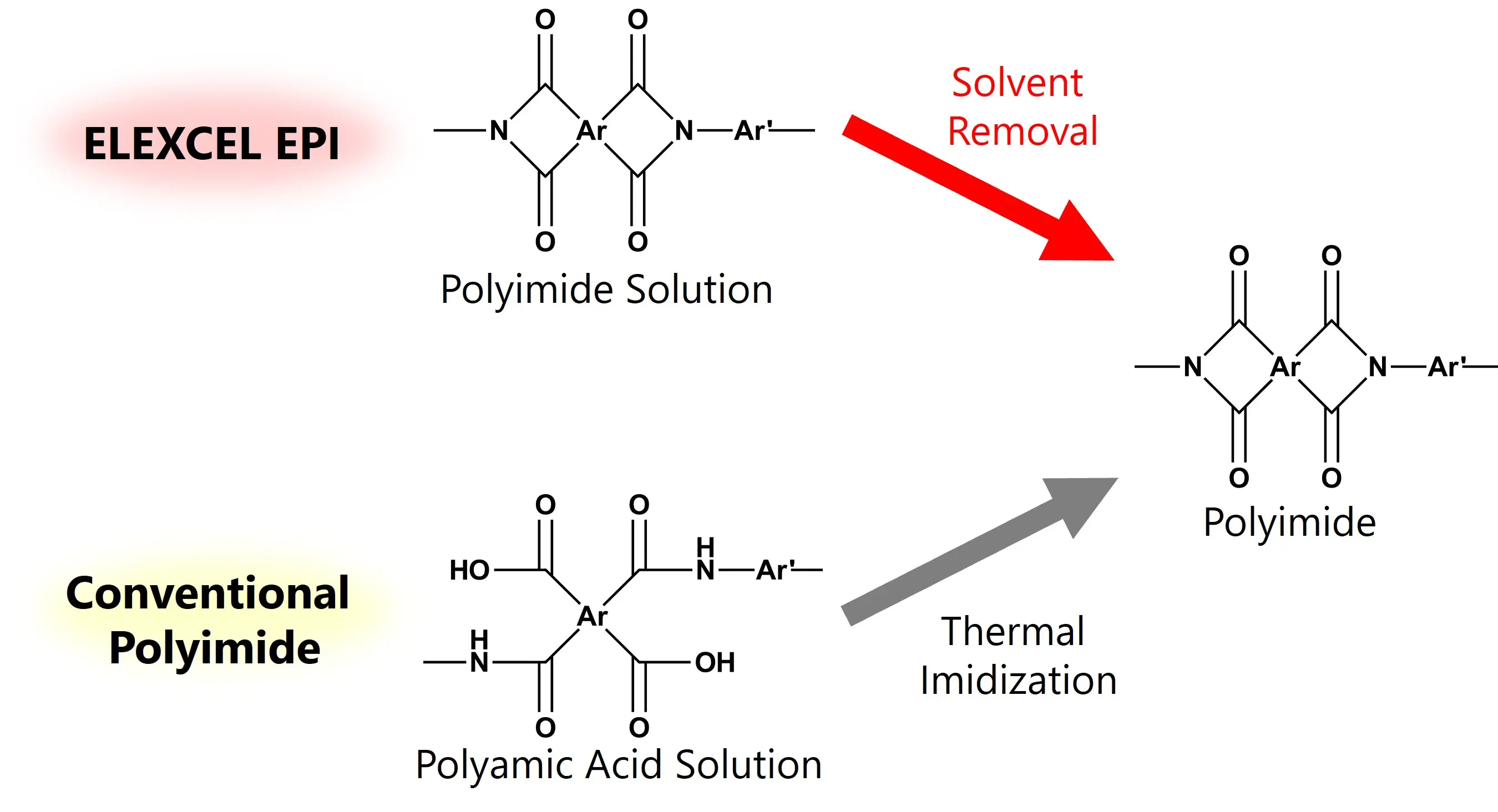
To address these challenges, we focused on polyimide, a material known for its excellent mechanical properties, including high strength and high elasticity.
Unlike conventional polyamic acids that require high-temperature imidization processes, we developed a solvent-soluble polyimide that is already imidized and does not require additional high-temperature treatment.
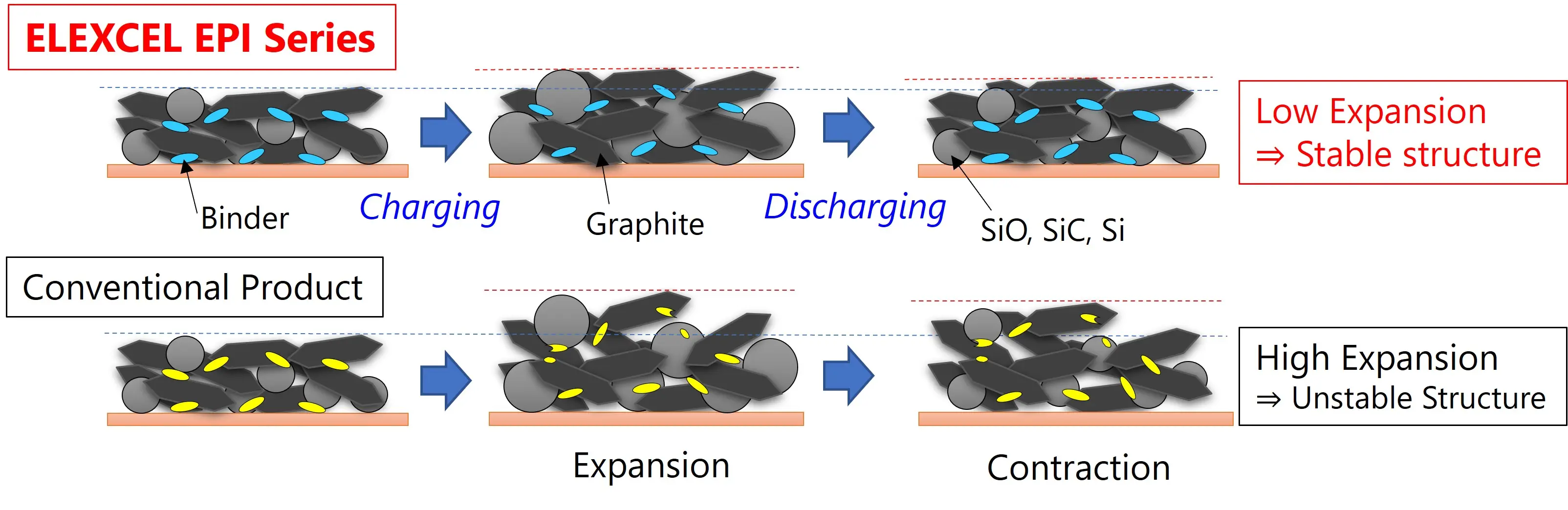
In designing this material, we leveraged the intrinsic high strength and elasticity of polyimide, while introducing strong adhesion properties. This enables effective suppression of the expansion and contraction of silicon-based materials and contributes to improved electrode structural stability.
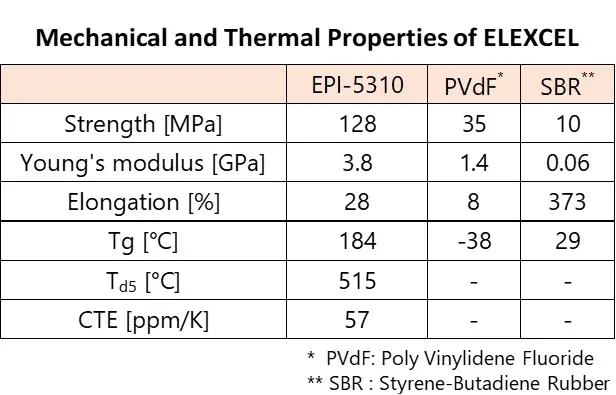
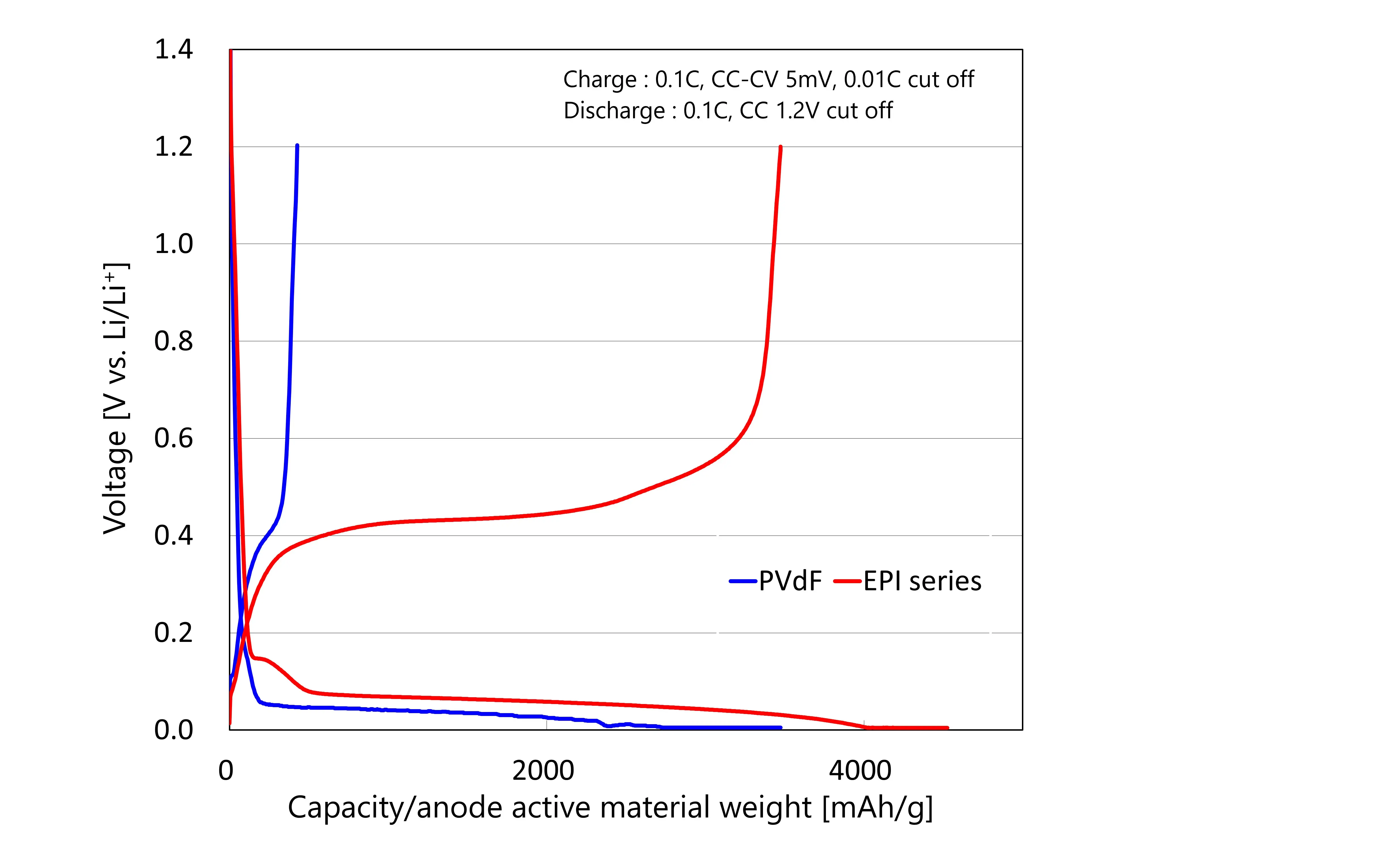
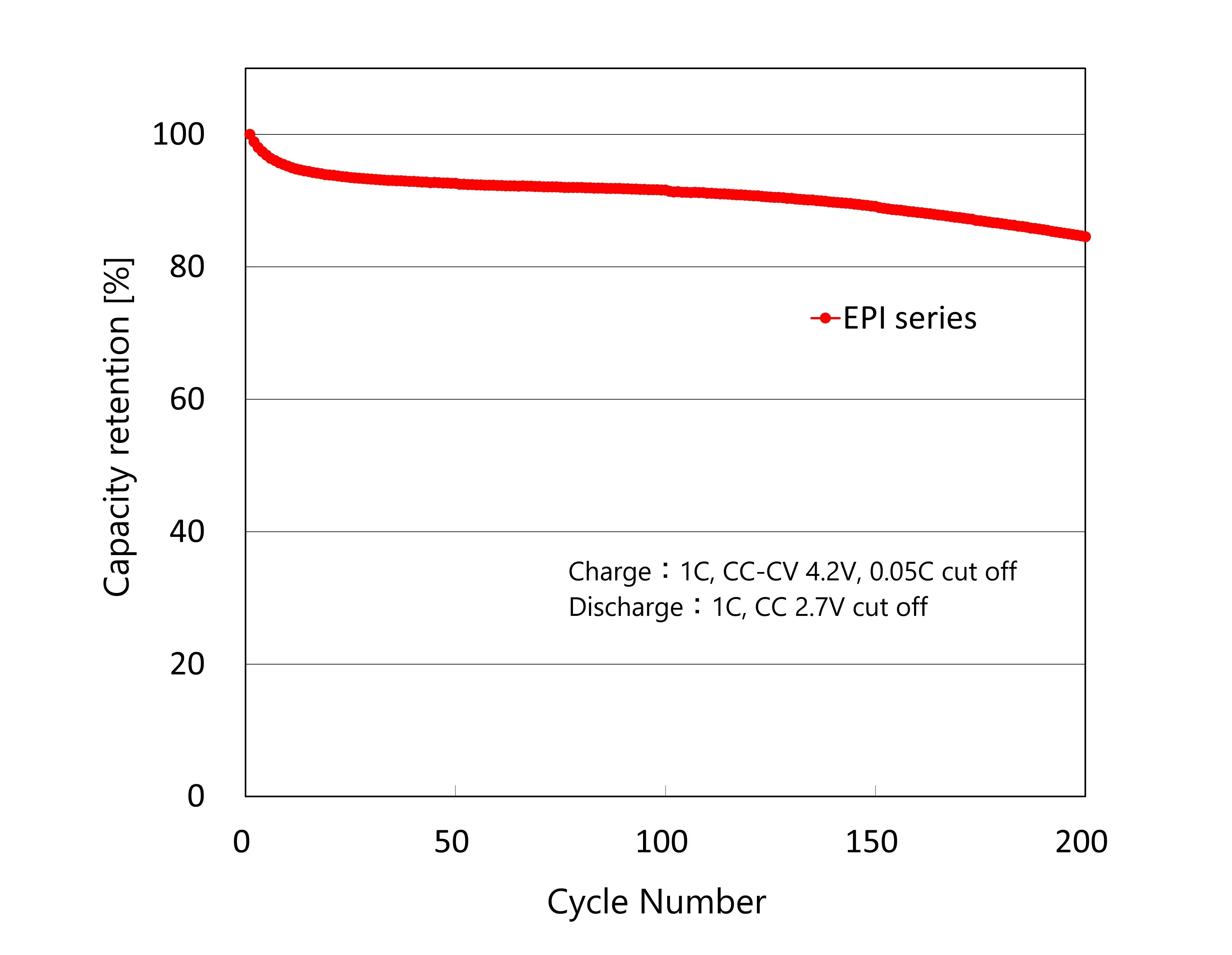
The ELEXCEL EPI series developed by our company utilizes polyimide to achieve superior strength and elasticity that cannot be obtained with conventional binders such as PVdF or SBR.
In addition, through optimized polymer design, the material exhibits excellent adhesion, effectively suppressing the expansion of silicon-based electrodes.
Functional Plastics Group
Environment & Energy R&D Department
Environment & Energy Business Division
Business Headquarters
HIBINO Atsuhiko