











Breaking the Trade-Off in Flame-Retardant Paper: Lightweight Cellulose Material with High Flame Retardancy
Share
Through a joint research project with the Graduate School of Agricultural and Life Sciences at The University of Tokyo and the Institute of Scientific and Industrial Research, Osaka University, we have developed a novel cellulose-based material that combines lightweight properties with high flame retardancy.
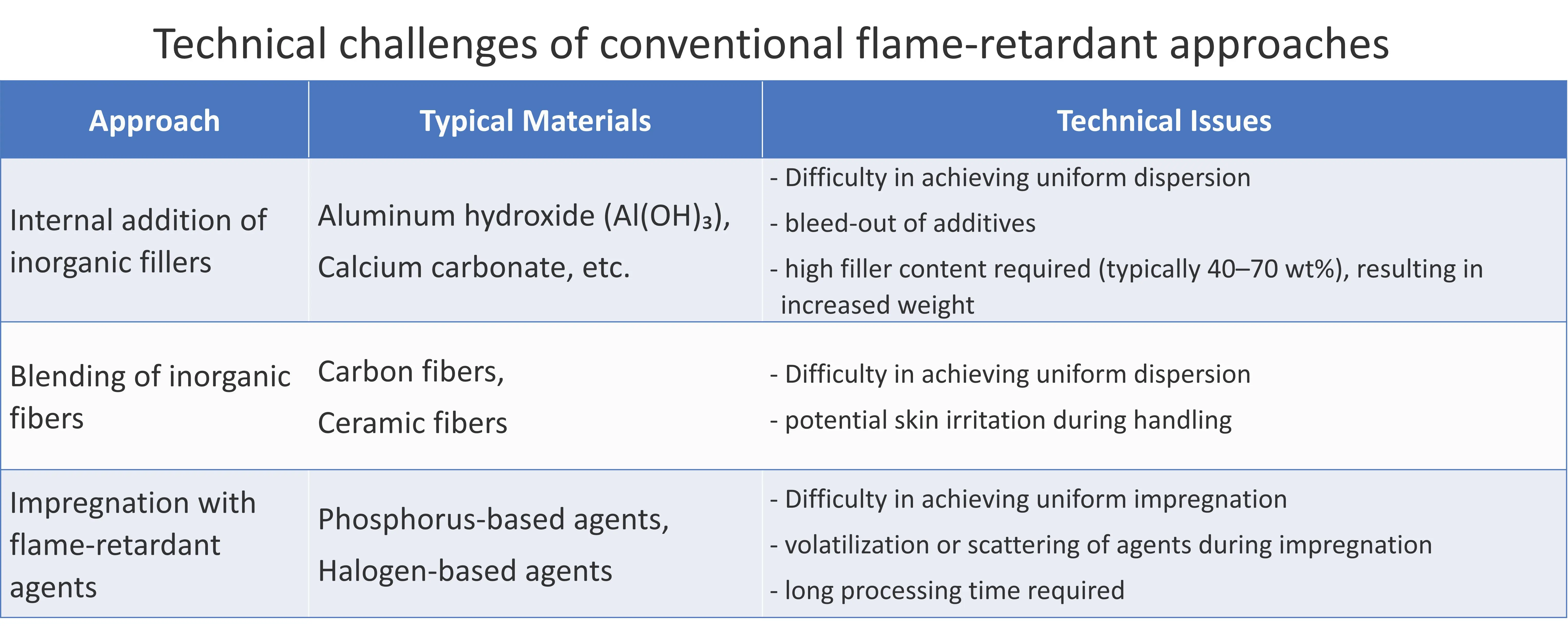
In recent years, demand for cellulose-based materials has increased due to growing concerns about environmental impact reduction and recyclability. However, cellulose is inherently flammable, making the enhancement of flame retardancy essential for its use in building materials and industrial applications.
Conventional flame-retardant papers have typically relied on approaches such as internal addition of inorganic fillers, Blending of inorganic fibers, or impregnation with flame-retardant agents. These methods, however, present several challenges, including difficulty in achieving uniform dispersion of flame-retardant components, increased material weight due to high additive loading, and concerns regarding environmental impact.
As a result, there has been a strong demand for the development of materials that can simultaneously achieve lightweight characteristics and high flame retardancy.
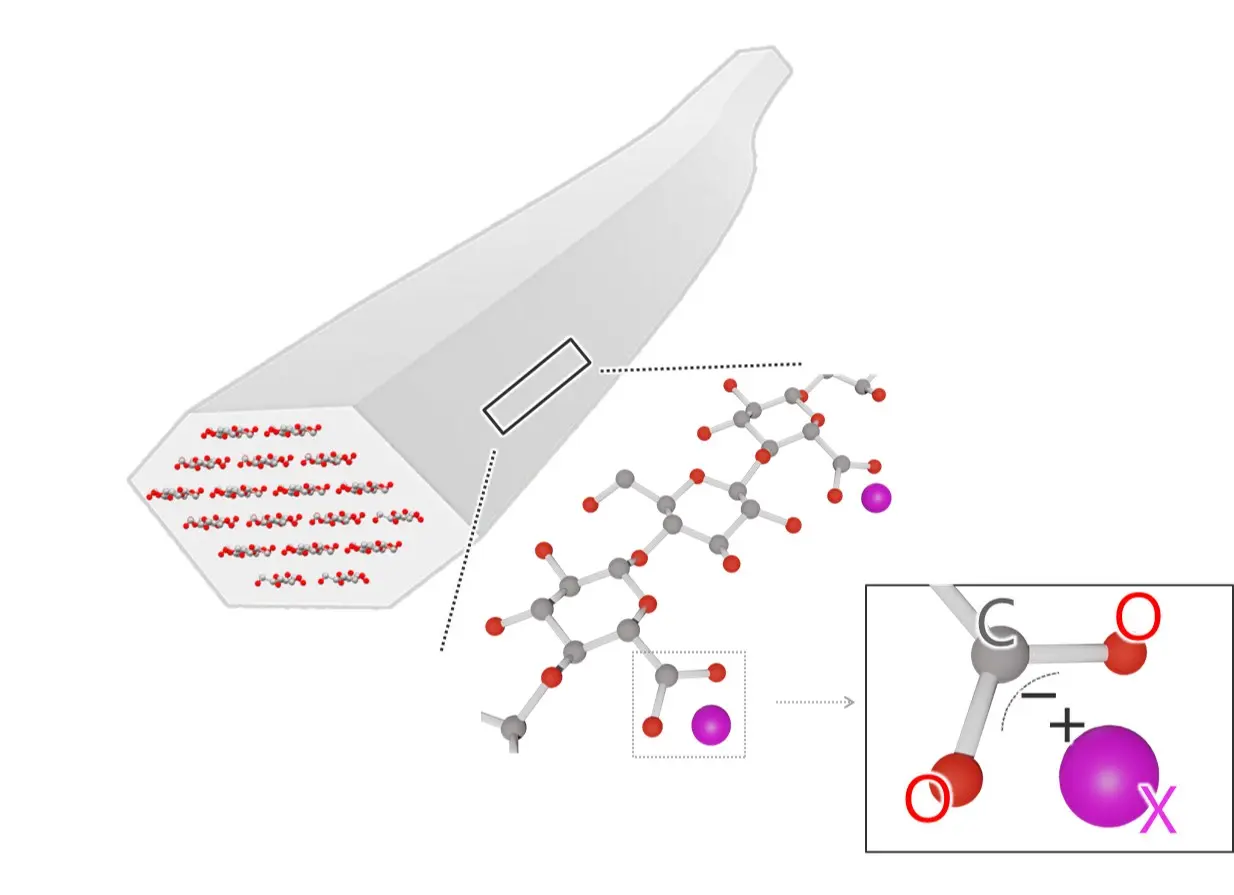
Using TEMPO-oxidized pulp—the intermediate material of our cellulose nanofiber product RHEOCRYSTA—as a substrate, we investigated methods to enhance flame retardancy through counter-ion modification and inorganic composite formation.
“RHEOCRYSTA” is trademark or registered trademark of DKS Co. Ltd.
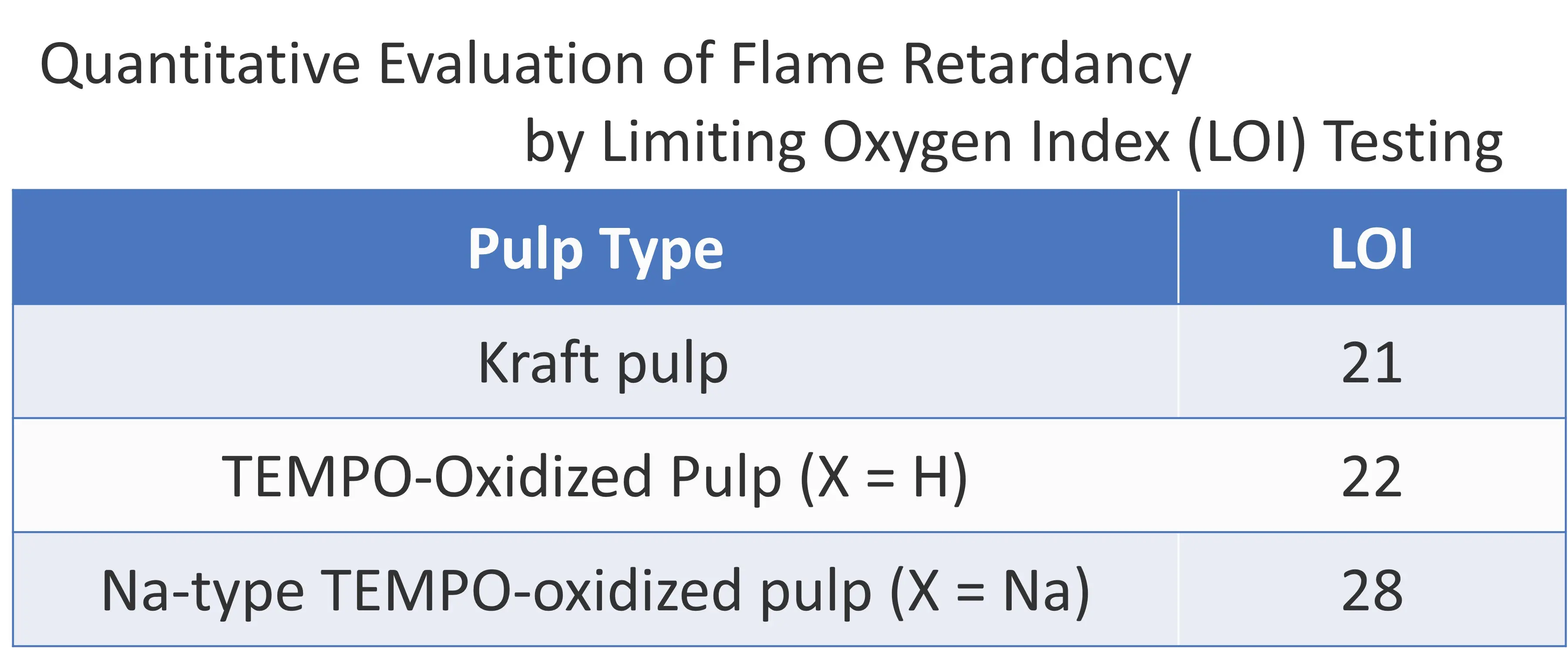
First, by converting the counter ions of the TEMPO-oxidized pulp to sodium (Na) or aluminum (Al), a significant increase in the Limiting Oxygen Index (LOI) was observed. In particular, the Na-salt form exhibited an LOI of 28, while the Al-type pulp demonstrated even higher flame-retardant performance.
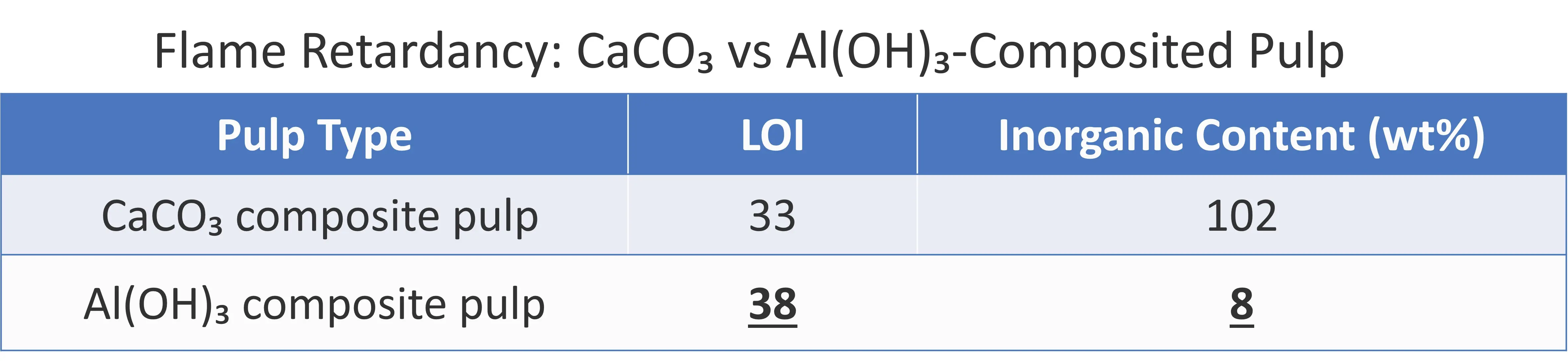
Flame retardancy was further enhanced by compositing the pulp with inorganic materials such as calcium carbonate (CaCO₃) and aluminum hydroxide (Al(OH)₃).
In the case of CaCO₃-composited pulp, the LOI value increased to 33; however, this improvement was accompanied by an approximately twofold increase in material weight. In contrast, Al(OH)₃-composited pulp achieved an LOI of 38 with only 8 wt% inorganic content, successfully maintaining lightweight properties while providing exceptionally high flame retardancy.

Combustion Behavior of Al(OH)₃‑Composited Flame‑Retardant Pulp (Comparison with Kraft Pulp)
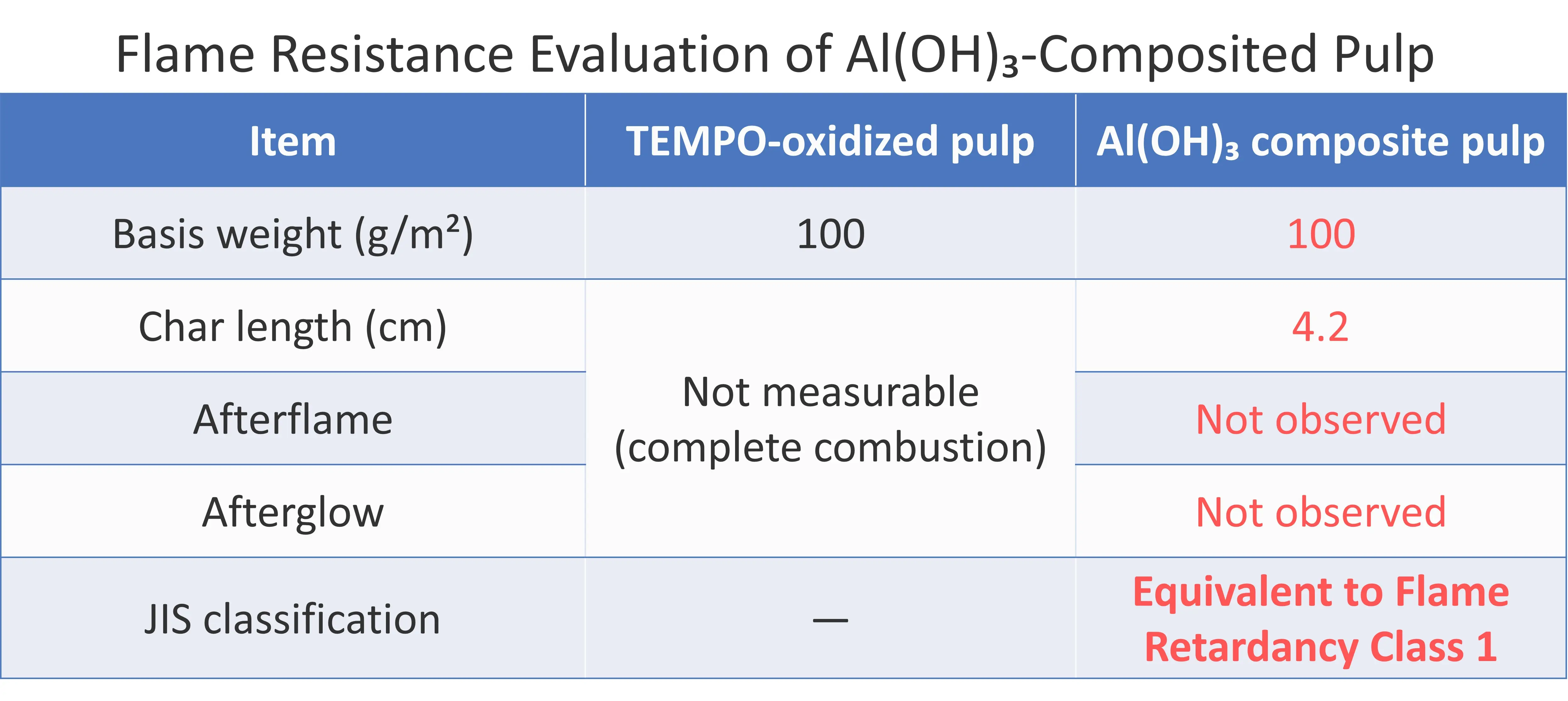
SEM observations and NMR analyses confirmed that aluminum was uniformly distributed throughout the pulp and crystallized on the fiber surfaces. Furthermore, flame resistance testing in accordance with JIS A1322-1966 demonstrated that the Al(OH)₃-composited pulp achieved performance equivalent to Flame Retardancy Class 1, indicating its practical applicability as a flame-retardant material.
By combining two approaches—counter-ion modification and inorganic composite formation—we successfully addressed the longstanding challenge of achieving both lightweight design and high flame retardancy in cellulose-based materials. In particular, the Al(OH)₃-composited pulp exhibits outstanding flame-retardant performance with minimal inorganic additive content, making it a promising new option for applications in building materials and a wide range of industrial fields.
Going forward, we will continue to pursue further performance enhancements and the establishment of mass-production technologies, contributing to the realization of a more sustainable society.

Sustainable Materials R&D Group
Corporate R&D Department
Kyoto Central R&D Division
SAITO Kanako