











Cellulose: A Renewable Material Powering Today and a Sustainable Future
Share
As global challenges such as climate change, resource depletion, and environmental pollution become increasingly severe, companies are expected to contribute to the realization of a sustainable society through their business activities. The Sustainable Development Goals (SDGs), adopted by the United Nations in 2015, provide an international framework toward this end. The SDGs consist of 17 goals and 169 targets aimed at achieving a sustainable and better world by 2030, guided by the principle of “leaving no one behind” and emphasizing the participation of all countries and stakeholders, including developed nations [1,2].
Against this backdrop, frameworks are being established to integrate sustainability into corporate management as a value creation story and to refine it through dialogue with investors and other stakeholders. For example, Japan’s Ministry of Economy, Trade and Industry (METI) has published the Value Creation Guidance 2.0, which positions the concept of SX (Sustainability Transformation)—synchronizing societal sustainability with corporate sustainability—as a framework for management, disclosure, and engagement [3].
In the materials industry, the choice of raw materials has a significant impact on environmental burden and resource circulation. As a result, renewable biomass-derived materials have attracted growing attention. Among them, cellulose stands out as a representative and highly promising material.
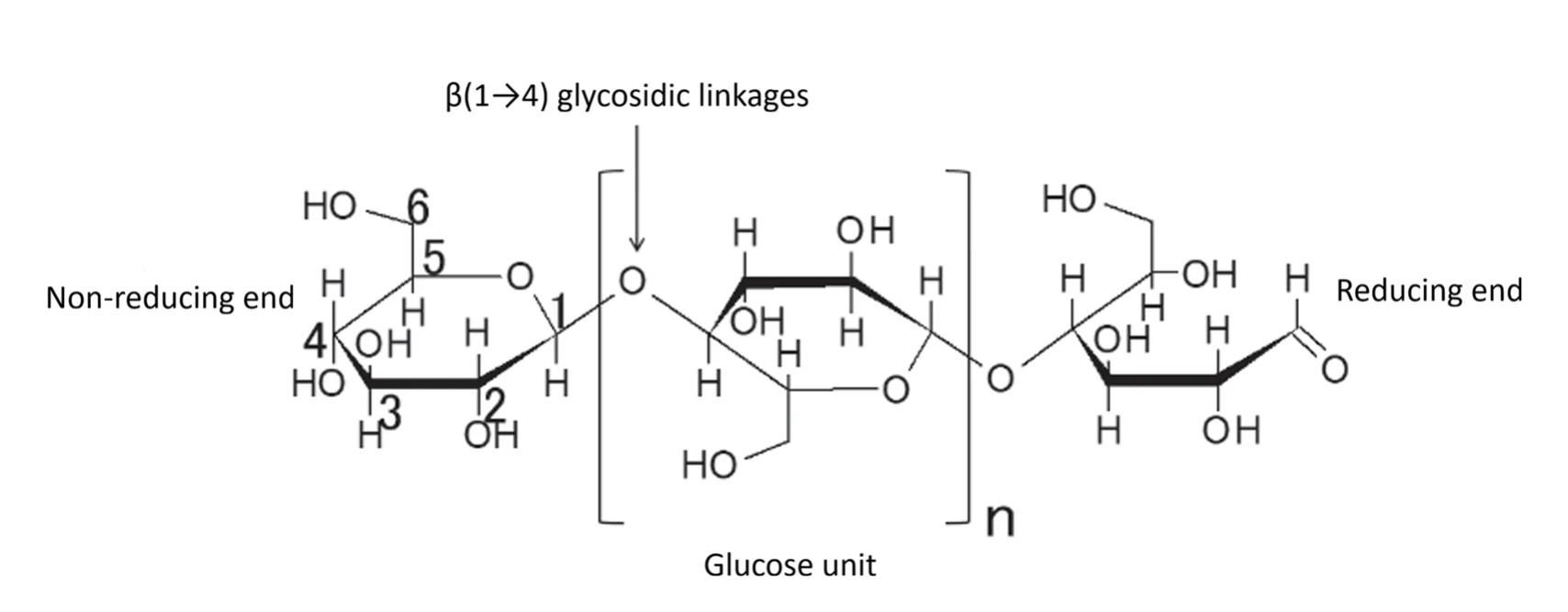
As shown in the figure on the right, cellulose is a natural polymer (polysaccharide) composed of D-glucose (glucopyranose) units linked linearly by β(1→4) glycosidic linkages, and it is the primary structural component of plant cell walls [4].
In our daily lives, we already use a wide range of cellulose-based products. Wood has long supported society as a construction material, cotton as clothing, and pulp as the foundation of paper and paperboard. In addition, regenerated cellulose materials such as rayon and cellophane—produced by dissolving and regenerating cellulose—are widely used as fibers and films.
Chemically modified cellulose derivatives also play essential roles. Hydroxyethyl cellulose (HEC), methyl cellulose (MC), and sodium carboxymethyl cellulose (CMC), for example, leverage their water solubility, thickening ability, and dispersion stability to serve as indispensable materials in the food, pharmaceutical, cosmetic, and industrial fields.
In this way, cellulose is already a material that is “usable today,” broadly supporting both everyday life and industrial applications.
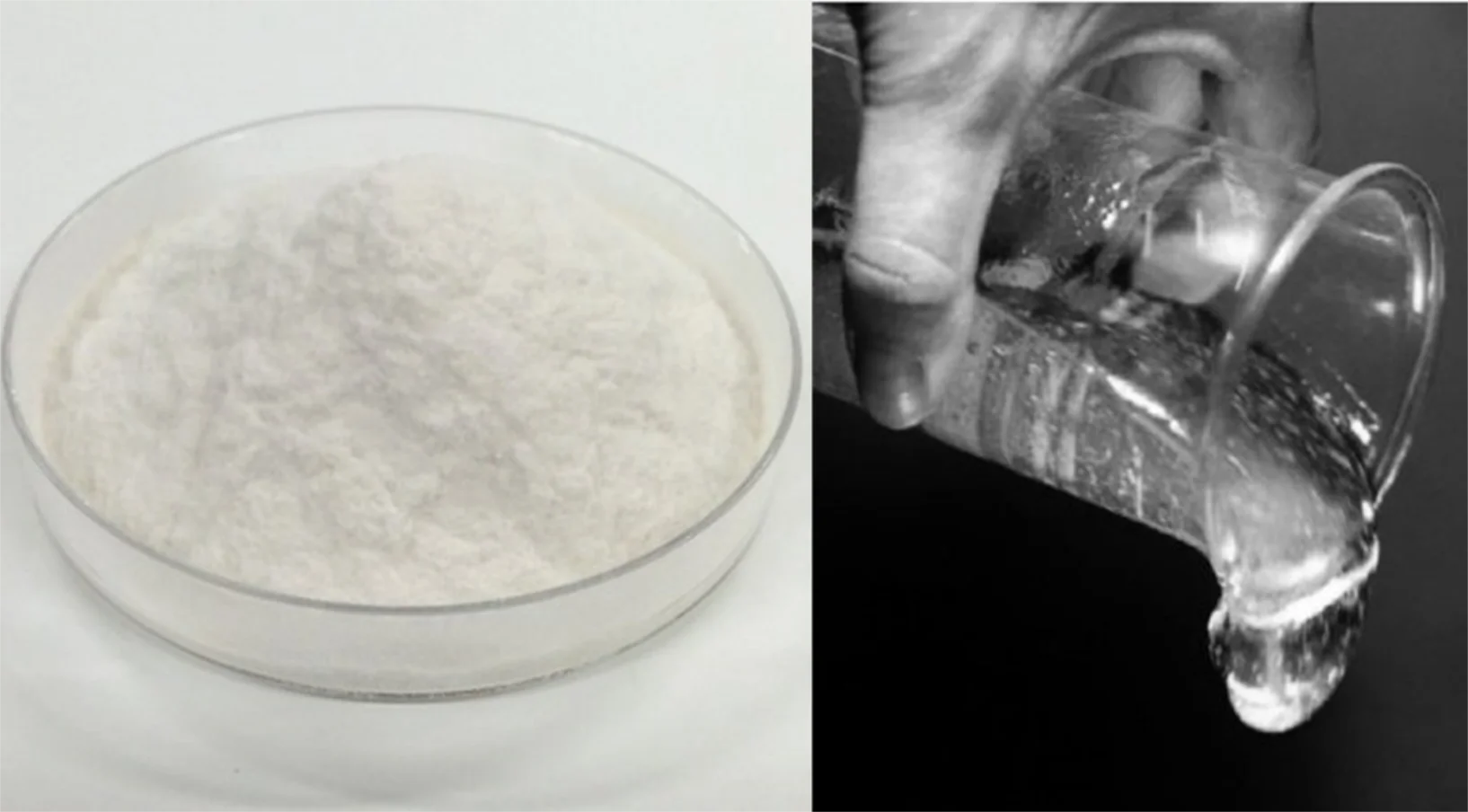
CMC is a water-soluble cellulose derivative that offers functions such as thickening, suspension and dispersion stabilization, emulsion stabilization, and binding. One of its key advantages is the ability to tailor properties—such as molecular weight and degree of substitution (degree of etherification)—according to application requirements. As a result, CMC is used across a wide range of fields, including food, cosmetics, agrochemicals, pharmaceuticals, and battery materials.
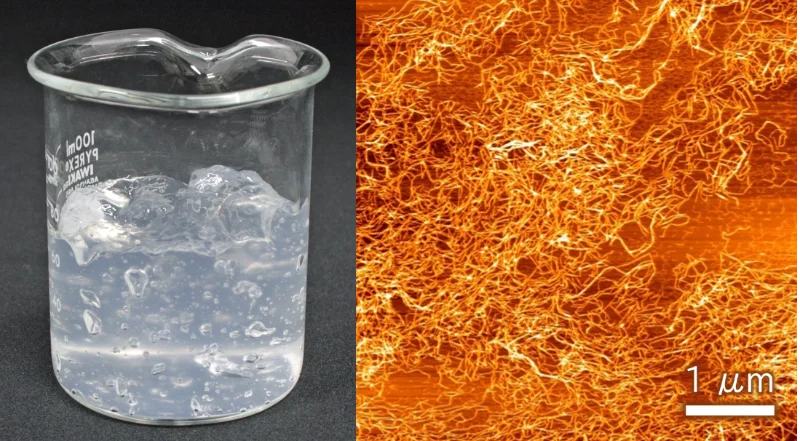
CNF, on the other hand, is a next-generation material produced by individualizing cellulose fibers down to the nanoscale. In addition to being lightweight and highly strong, CNF exhibits functionalities such as thickening, dispersion stabilization, and film formation, which originate from the network structure formed by nanofibers. These properties have led to active research and practical applications in diverse areas, including resin and rubber composites, coatings and inks, cosmetics, and ceramics.
- 1. Ministry of Foreign Affairs of Japan, “What is the SDGs?” (JAPAN SDGs Action Platform) (accessed March 2, 2026)
- 2. United Nations Information Centre, “The 2030 Agenda” (accessed March 2, 2026)
- 3. Ministry of Economy, Trade and Industry (METI), “Value Creation Guidance 2.0 for Dialogue between Companies and Investors” (accessed March 2, 2026)
- 4. Yoshiki Horikawa, Basic Chemistry and Structure of Cellulose, Chemistry & Education, 70(1), 24–27 (2022)

Sustainable Materials R&D Group
Corporate R&D Department
Kyoto Central R&D Division
GOI Yohsuke