











Toward Sustainable Polymer Modification Enabled by the Bio-Based Additive “MONOPET” series
Share
Leveraging our proprietary sucrose modification technology, we offer a range of sucrose fatty acid esters (product name: DK ESTER) with a wide hydrophilic–lipophilic balance (HLB), from highly hydrophilic to highly lipophilic. In addition, we have developed and commercialized the MONOPET series, which is primarily used as polymer additives.
In response to growing sustainability demands, there is increasing interest in raising the biomass-derived content of plastics. Against this backdrop, the MONOPET series—featuring a sugar-based backbone—has attracted strong interest from polymer manufacturers and plastic processors. We are therefore actively expanding its functionality and broadening its range of applications.
The DK ESTER series is mainly used in food additive applications and has not been applied as polymer additives. One of the key reasons is its limited heat resistance. DK ESTER products begin to decompose below 200 °C, which is lower than the typical melting temperatures of many resins. This behavior is attributed to their molecular design, in which hydroxyl (OH) groups of sucrose remain partially unesterified.
In contrast, the MONOPET series consists of two products—MONOPET SB and MONOPET SOA—which differ in their ester substituents. MONOPET SB is a benzoic acid ester, while MONOPET SOA is an acetic acid ester. Both products exhibit a high degree of substitution (7–8), with nearly all hydroxyl groups of sucrose fully esterified. As a result, their decomposition onset temperatures exceed 250 °C, which is higher than the melting temperatures of common resins. This thermal stability enables their use as polymer additives.
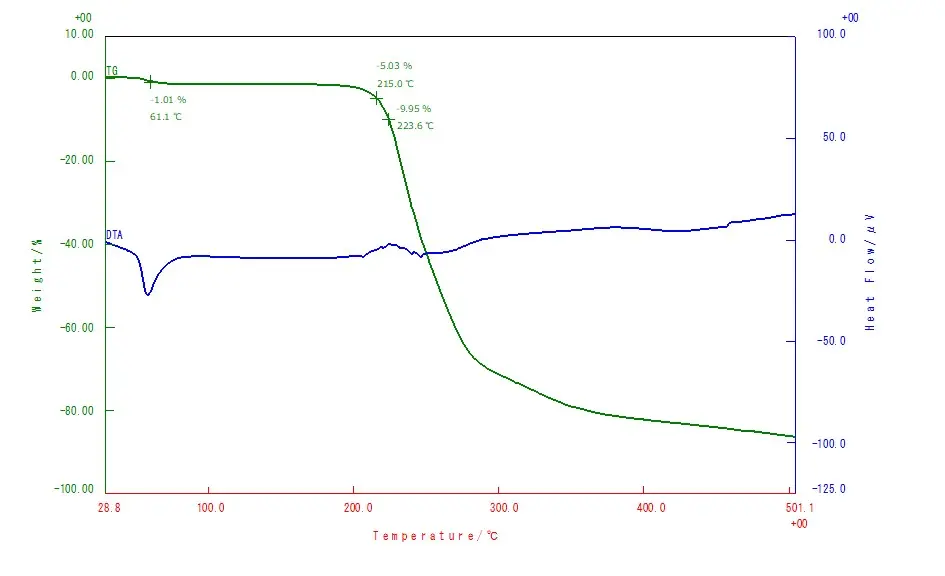
Temperature at 5% weight loss : 215 °C
10% weight loss : 224 °C
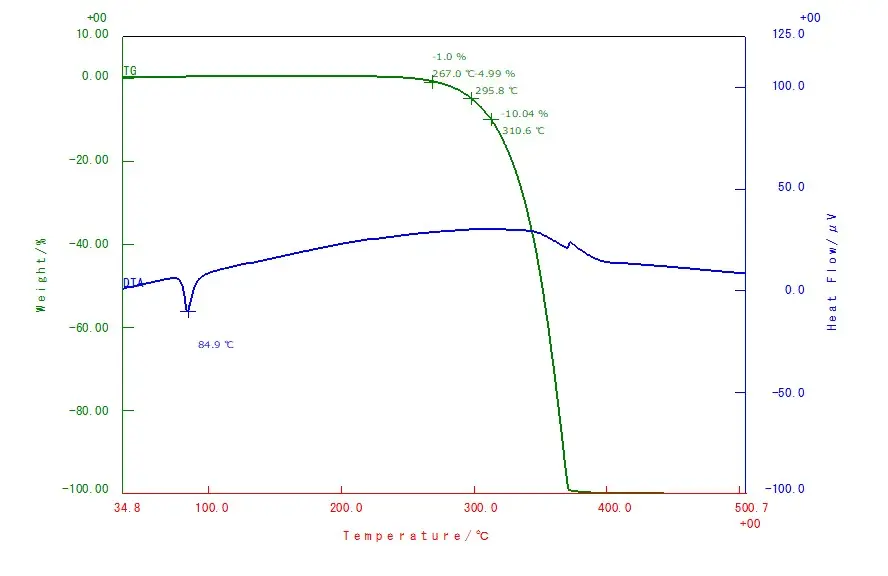
Temperature at 5% weight loss : 296 °C
10% weight loss : 311 °C
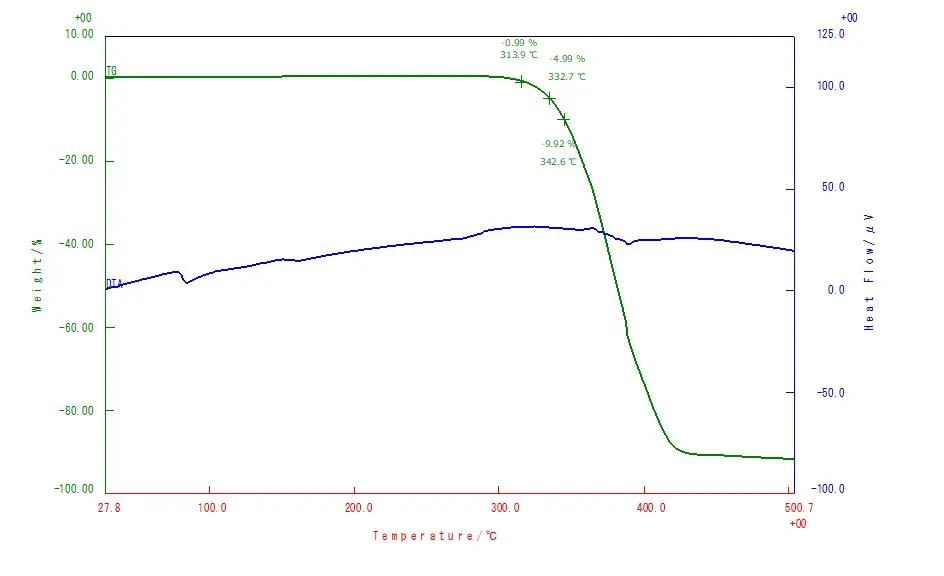
Temperature at 5% weight loss : 333 °C
10% weight loss : 343 °C
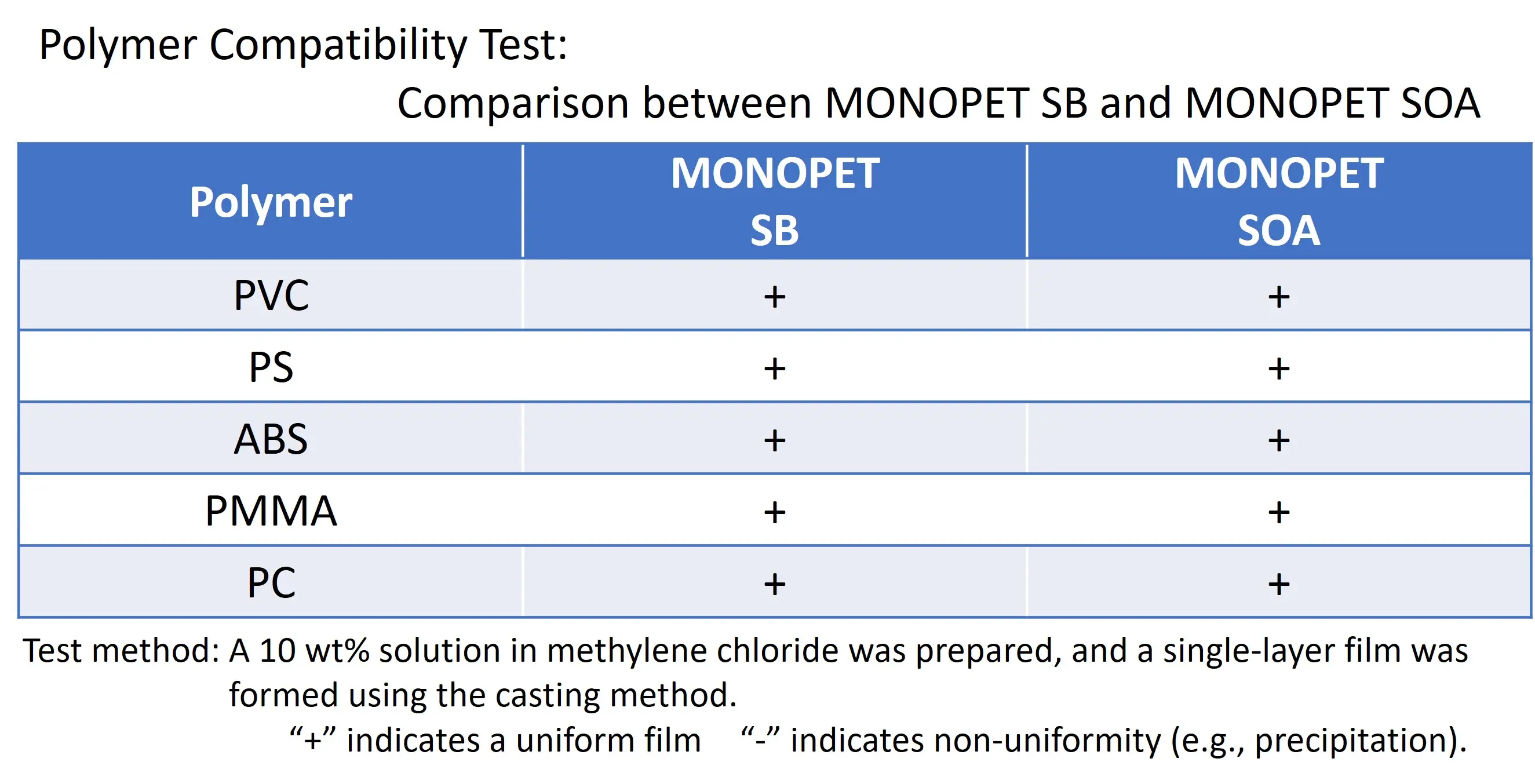
Solution casting evaluations have demonstrated that the MONOPET series exhibits good compatibility with a wide variety of polymer materials, including commodity plastics, transparent plastics, and engineering plastics. This broad compatibility is one of the key advantages of the series.
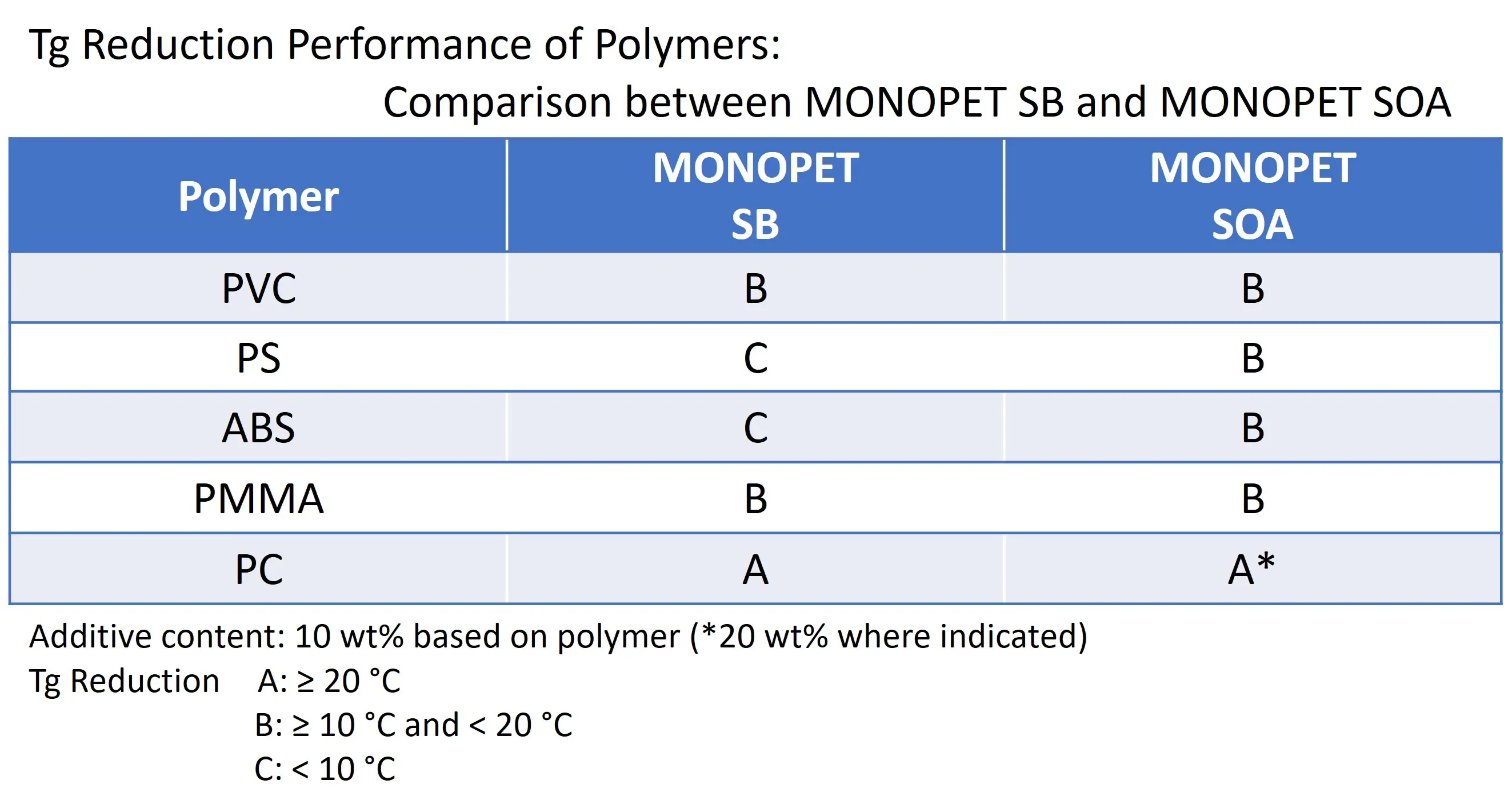
As noted above, MONOPET products are compatible with many polymer matrices. Furthermore, it has been confirmed that such compatibility leads to a reduction in the glass transition temperature (Tg) of the host polymer.
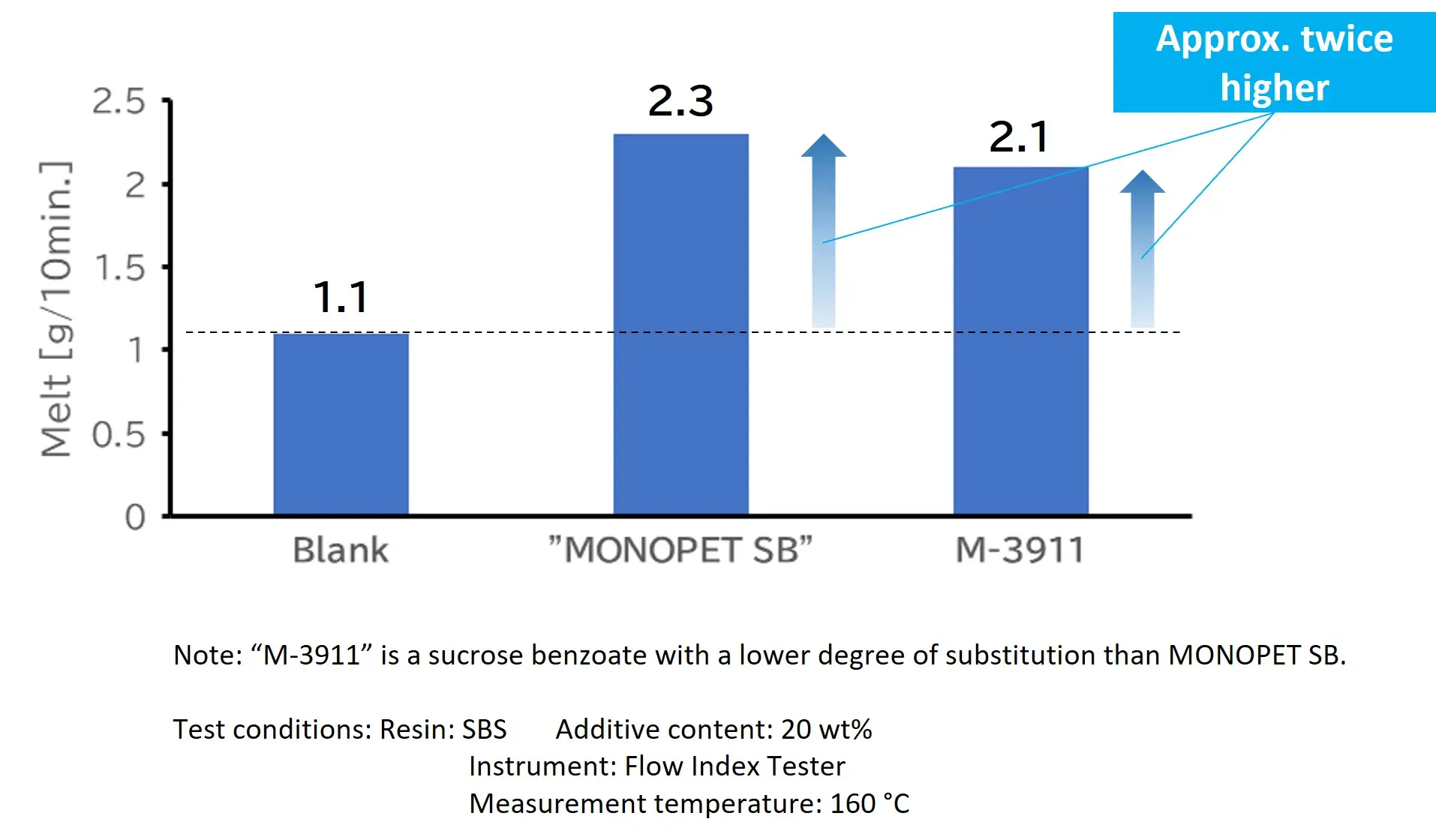
In addition, we have identified that MONOPET SB improves resin flowability, as indicated by an increase in melt flow rate (MFR).
By taking advantage of these properties, molding pressure during plastic processing can be reduced, resulting in improved processability. Lower processing temperatures are also achievable, contributing to energy savings.
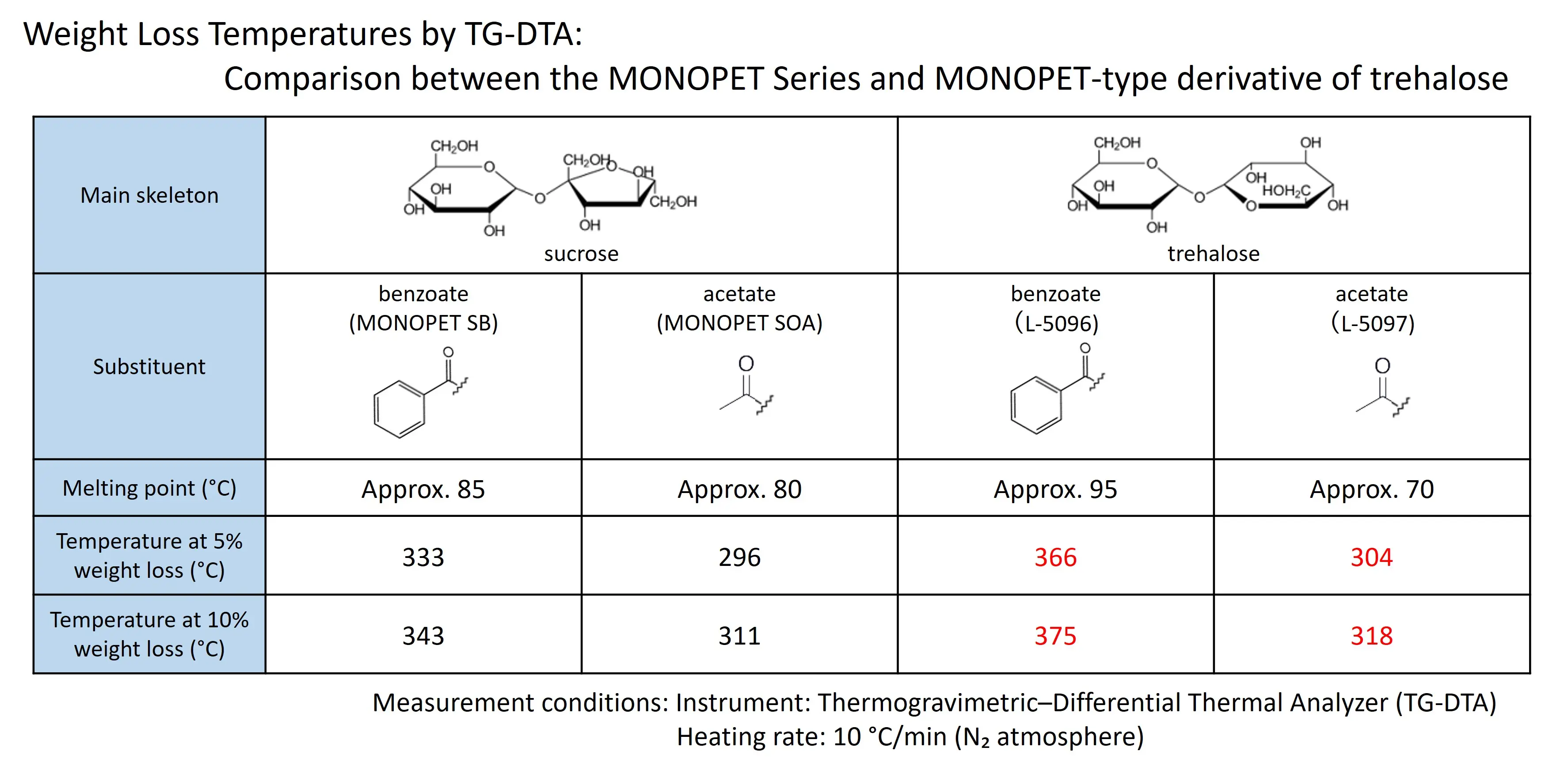
As part of our ongoing efforts to expand sugar-based modification technologies, we are exploring derivatives based on alternative sugar backbones. We have successfully developed a MONOPET-type derivative of trehalose, which, like sucrose, is classified as a non-reducing disaccharide. Trehalose is a naturally occurring, highly stable non-reducing sugar and exhibits superior thermal and chemical stability compared with sucrose.
Compared with conventional sucrose-based materials, this new derivative suppresses thermal degradation and discoloration even under high-temperature molding conditions. It is therefore suitable for applications involving engineering plastics that require elevated processing temperatures. Similar to the MONOPET series, this trehalose-based derivative is expected to be compatible with a wide range of polymers. In addition to conventional plastics, we are also investigating applications in polymer systems containing plant-derived materials.
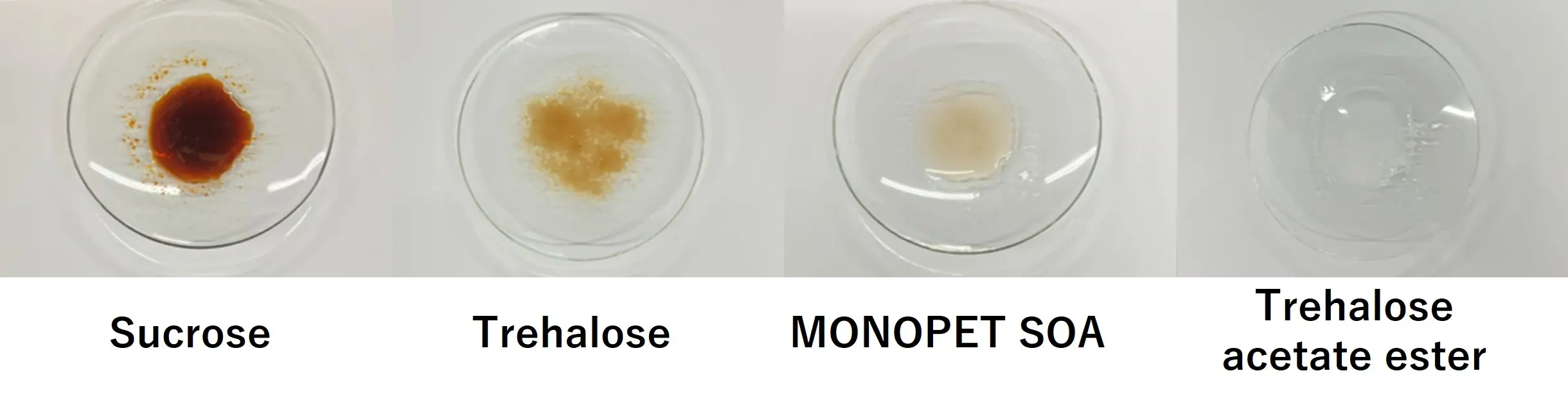
To simulate actual melt compounding conditions, materials were exposed to 200 °C for 30 minutes. As shown in the figure on the left, the trehalose-based derivative exhibits significantly reduced discoloration compared with sucrose-based materials.
By leveraging decades of expertise in the synthesis and application evaluation of sugar derivatives, we continue to propose optimal material solutions tailored to specific polymers and plastic applications, including both sucrose- and trehalose-based derivatives. Through the market development of polymer additives that combine high performance with environmental responsibility, we contribute to the realization of a sustainable society.

Sugar & Cellulose Derivatives Group
Core Materials R&D Department
Core Materials Business Division
Business Headquarters
AMANO Yuuki