











Interface Engineering for Enhanced Power Performance and Extended Cycle Life of Lithium-Ion Batteries
Share
Lithium-ion batteries (LIBs) are being increasingly adopted in a wide range of applications, from portable electronic devices to electric vehicles and stationary energy storage systems. As their applications continue to expand, further improvements in battery performance are required, including higher energy density, enhanced power capability, and longer service life.
Achieving higher LIB performance requires improvements in the properties of the materials that make up the battery. Among these materials, cathode active materials play a particularly important role because they directly affect battery performance. Since various electrochemical reactions occur on the cathode surface during charge and discharge cycles, controlling surface structures and interfacial reactions is a key challenge in the development of high-performance LIBs.
To address these challenges, we are developing a surface modification technology for cathode active materials utilizing Li-ion coordinating polymers.
This technology employs a specially designed polymer with Li-ion coordination capability as a surface modifier for cathode active materials. The polymer possesses three key characteristics: Li-ion coordination capability, crosslinkability, and solvent affinity.
Its Li-ion coordination capability enhances local Li-ion availability, while its crosslinkability immobilizes the polymer on the surface of the cathode active material to form a highly durable coating layer. In addition, its solvent affinity enables uniform coating over the cathode particle surface.
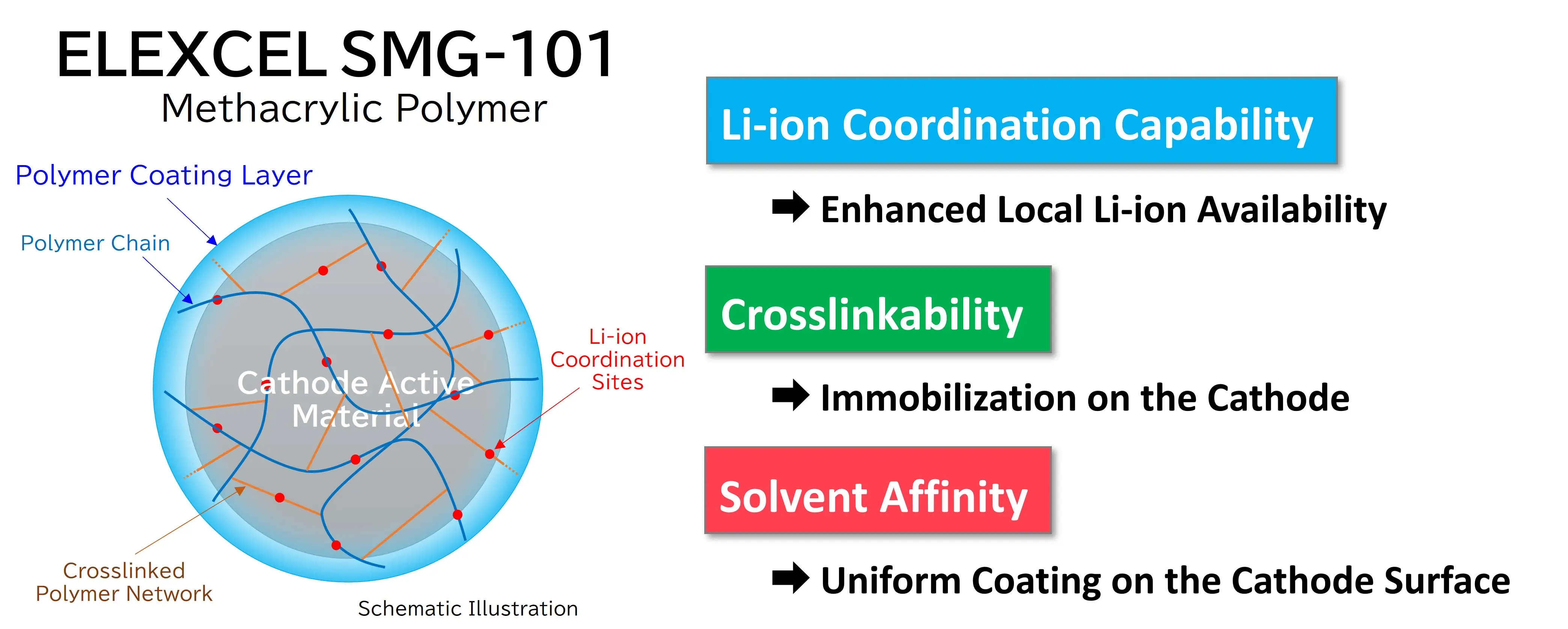
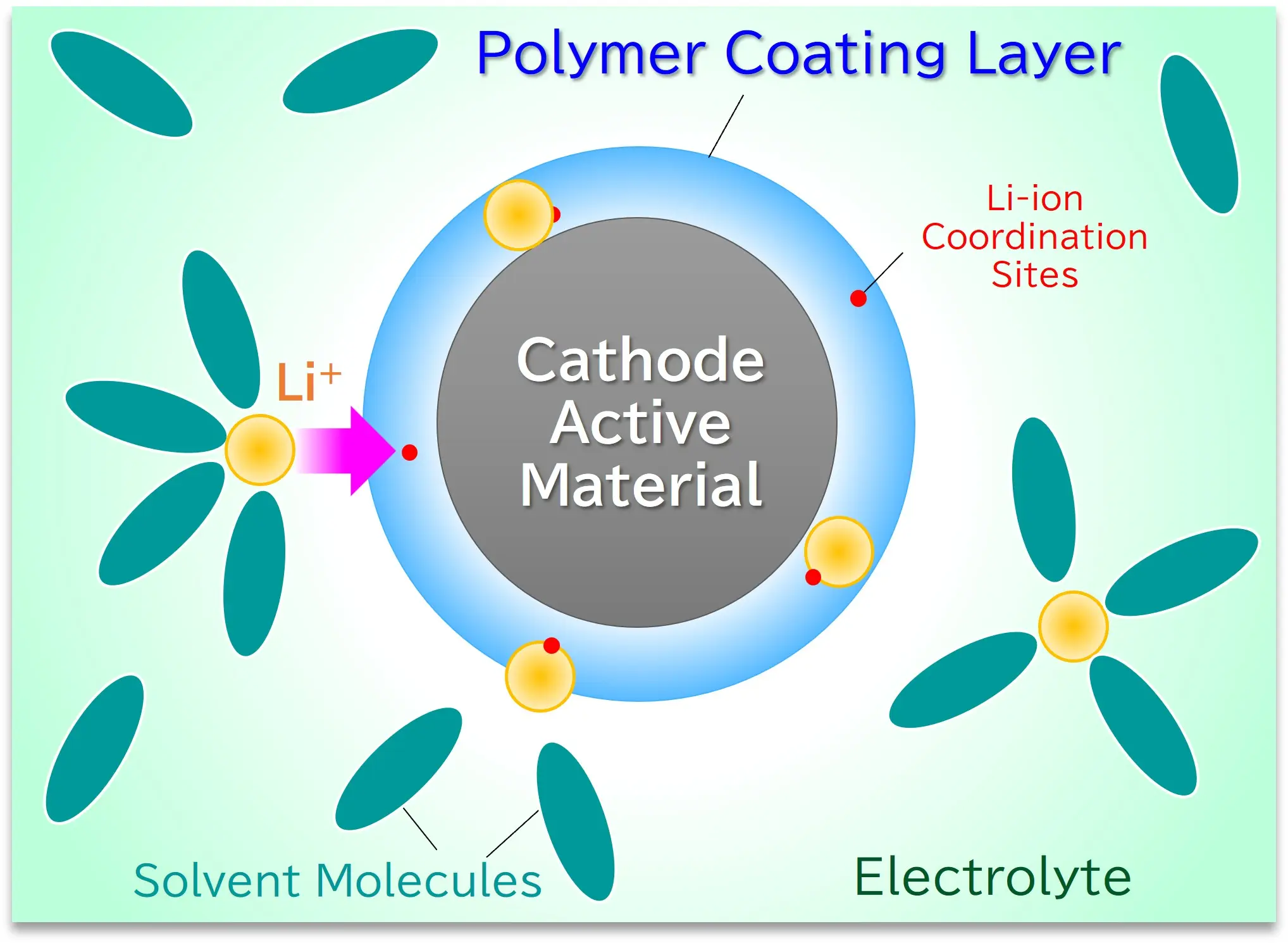
By combining these characteristics, the polymer forms a durable protective coating on the cathode active material while promoting Li-ion transport through a "molecular gate effect." Through these surface functions, the technology stabilizes the surface condition of cathode active materials and contributes to improved battery performance.
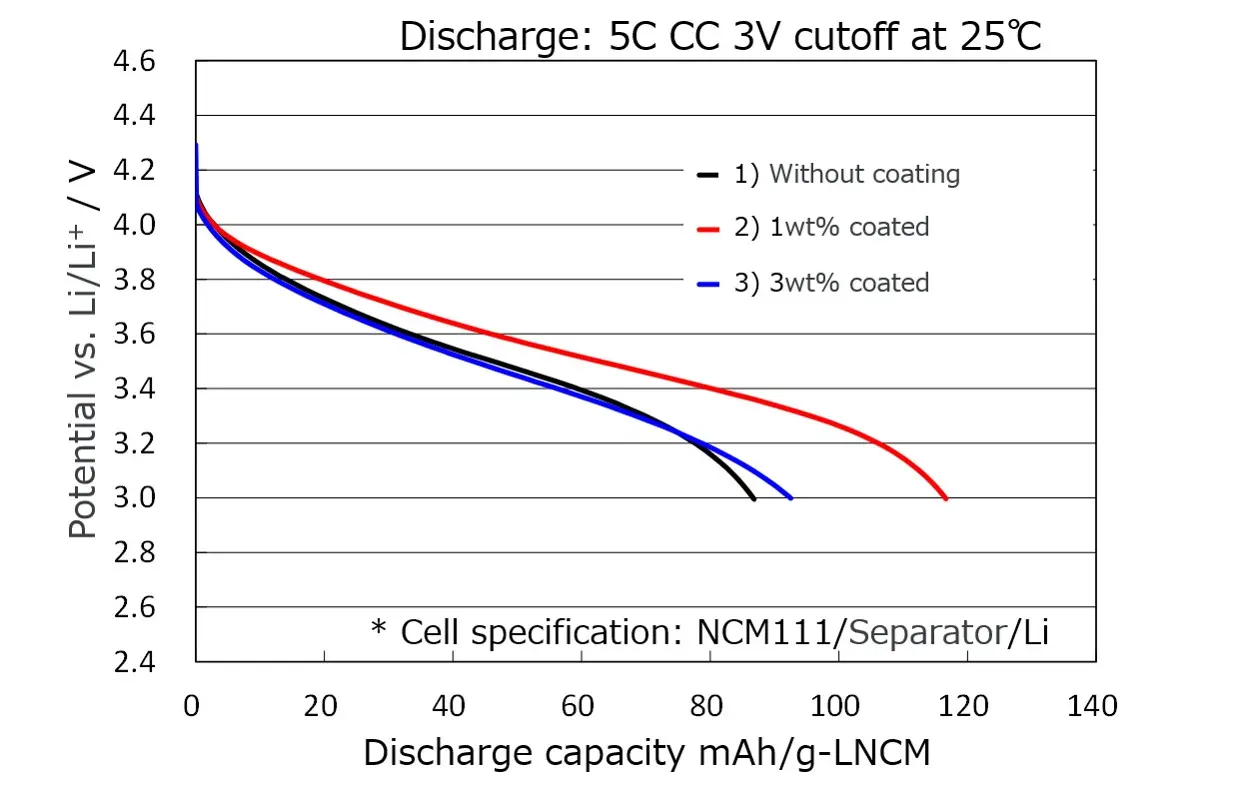
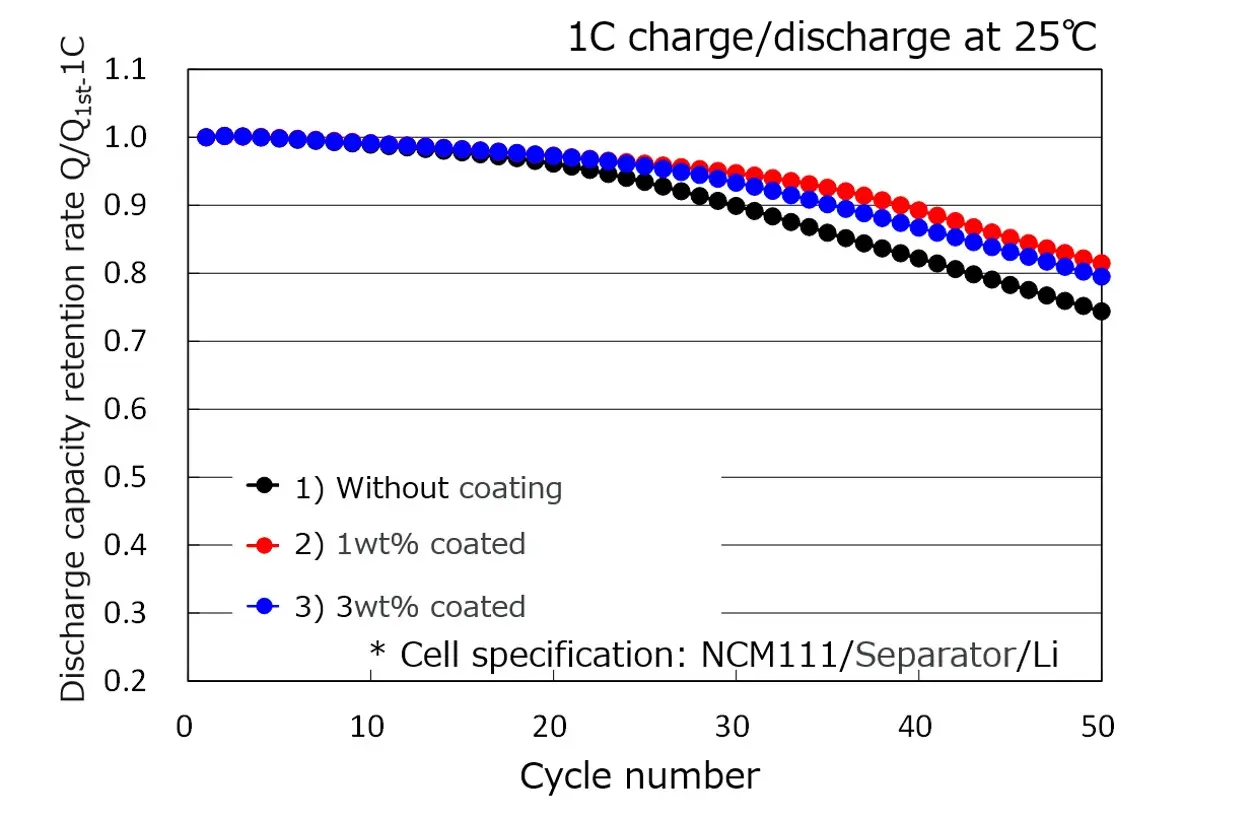
Batteries were fabricated using surface-modified cathode active materials, and their performance was evaluated. High-Rate Discharge performance testing showed that cathodes prepared with the surface-modified materials delivered higher discharge capacities than those using untreated materials. In addition, cycle life performance testing demonstrated improved capacity retention.
These results suggest that the polymer coating effectively regulates Li-ion transport and interfacial reactions on the cathode active material surface. Furthermore, the observed battery performance is consistent with the polymer design concept of functionalizing cathode surfaces through the combined effects of Li-ion coordination capability, crosslinkability, and solvent affinity. The findings indicate that this surface modification approach can contribute to enhanced power performance and extended cycle life in LIBs.
Going forward, we will continue to optimize both polymer design and surface modification technologies to meet the diverse performance requirements of LIB applications. Through further development and commercialization, we aim to contribute to the advancement of next-generation high-performance lithium-ion batteries.

Battery Materials Group
Environment & Energy R&D Department
Environment & Energy Business Division
Business Headquarters
OHARA Megumi