











R&D Policy and Strategy
Message from the General Manager of Kyoto Central R&D Division

R&D Strategy —Working to Increase the New Product Conversion Rate—
to scroll
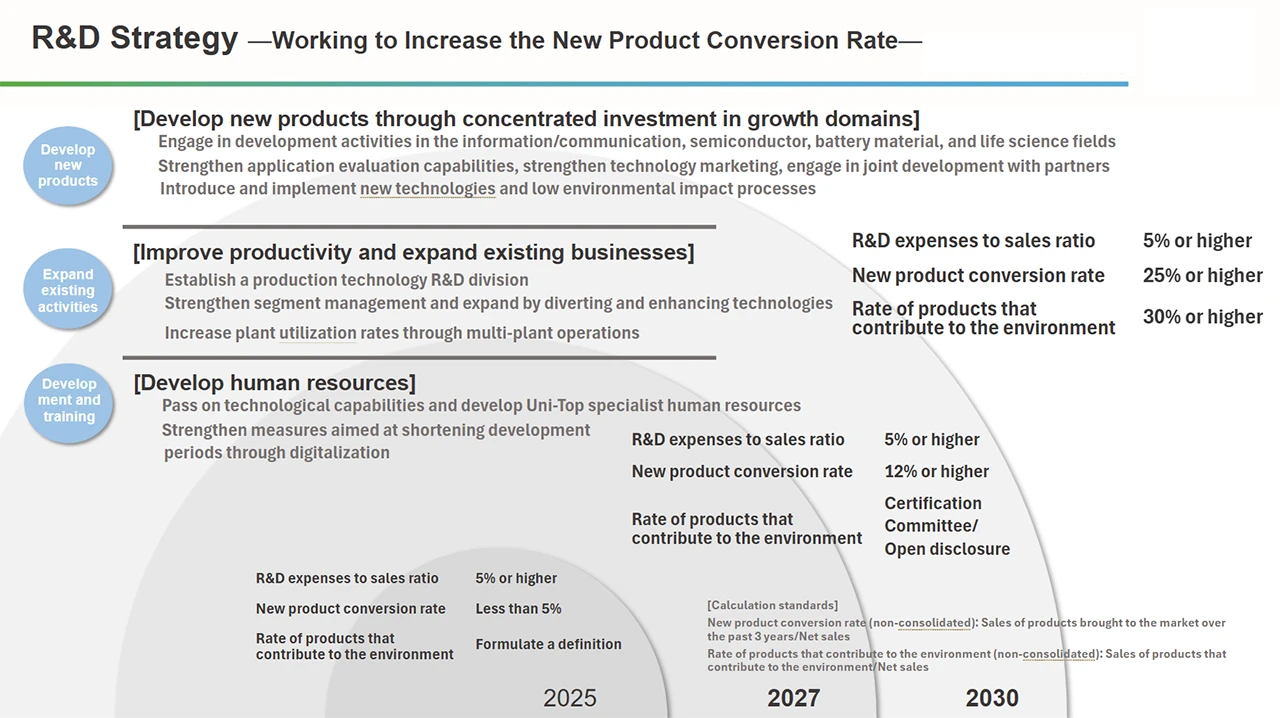
Increasing the rate of new product development and enhancing corporate value
Sales growth is evidence that we have succeeded in creating value. Maintaining the proportion of new products within total sales above a certain level serves as an important indicator that we are continuously using our expertise in chemistry to respond to the emerging needs of society and the market.
As an R&D-driven company, we do not focus solely on existing core products; instead, we address new challenges through R&D efforts and ongoing cost reductions.
Our goal of raising the new product development ratio to at least 25% by 2030 reflects a strong commitment to R&D that anticipates the future and responds to new needs. This approach will lead to sustainable improvement in corporate value.
[Develop new products through concentrated investment in growth domains]
- Engage in development activities in the information/communication, semiconductor, battery material, and life science fields
- Strengthen application evaluation capabilities, strengthen technology marketing, engage in joint development with partners
- Introduce and implement new technologies and low environmental impact processes
[Improve productivity and expand existing businesses]
- Establish a production technology R&D division
- Strengthen segment management and expand by diverting and enhancing technologies
- Increase plant utilization rates through multi-plant operations
[Develop human resources]
- Pass on technological capabilities and develop Uni-Top specialist human resources
- Strengthen measures aimed at shortening development periods through digitalization
Intellectual Property Strategy -The challenge to Uni-Top-
Relationship Between R&D findings and Performance indicator
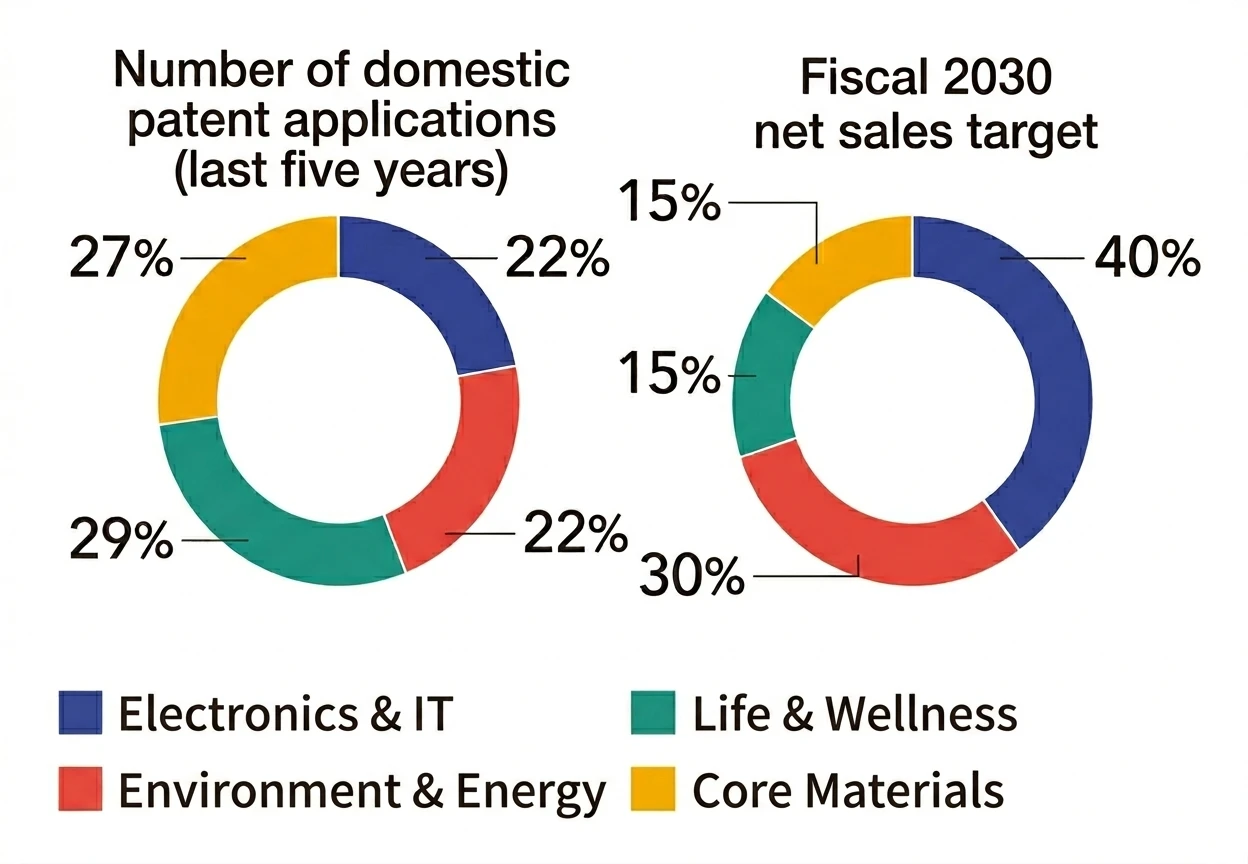
We have set the commercialization of R&D findings within five years as a performance indicator. Working backwards, our current patent portfolio is an indicator of the future portfolio that will generate the net sales of segments in the final fiscal year of the Plan.
Uni-Top Through Collaboration Between Departments and IP Activities
Extremely close four-way collaboration between materials researchers, researchers investigating applications, evaluation engineers, and IP staff is the source of our R&D capabilities. Materials researchers can consult in-house researchers who are investigating applications at DKS, to develop new applications. This is the start of our “Do it in-house” approach.
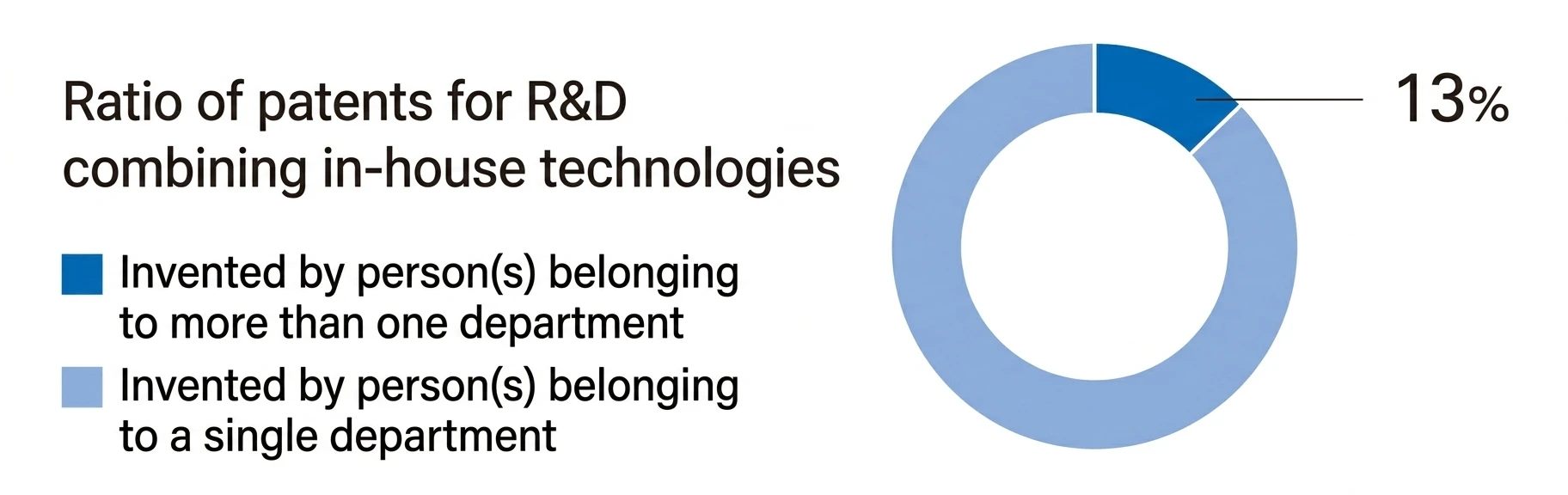
Among our patent applications filed in Japan over the past five years, 13% resulted from collaboration between inventors from different fields. The water-based composite binders for negative electrodes we are currently focusing on were invented through such a framework. In-house analysis of the combinations of inventors by patent application showed that joint inventions involving inventors of different departments are common, and that invention triggers also vary. We are committed to further accelerating our Uni-Top strategy, which seeks to create value through the approach of rolling out proprietary technologies to different fields and combining technologies. As a unique presence that uses chemistry to provide solutions to problems, we are striving to establish a unique technological position that sets us apart from other companies.
Preventing misconduct in R&D activities and managing and administering public funds
Conpliance