










DKS Management Plan
With “Uni-Top,” “Sustainability,” and “Challenge” as our guiding principles, we continue to address social issues and enhance corporate value.
Contents
- 1. DKS’ Vision for 2030
- 2. Scenario Targeting 2030
- 3. Growth Strategy Targeting 2030
- 3-1. Growth Strategy Targeting 2030 —Topics—
- 3-2. Growth Strategy Targeting 2030 —Change in Disclosure Segments—
- 4. Sustainability —Increase Corporate Value by Addressing ESG Issues—
- 5. Cash Allocation (FY2025-FY2029)
- 6. Capital Investment Strategy
- 7. Shareholder Returns Policy
For further details
Our past Medium-Term Management Plan materials are available here.
Medium-Term Management Plan Presentation Materials1. DKS’ Vision for 2030
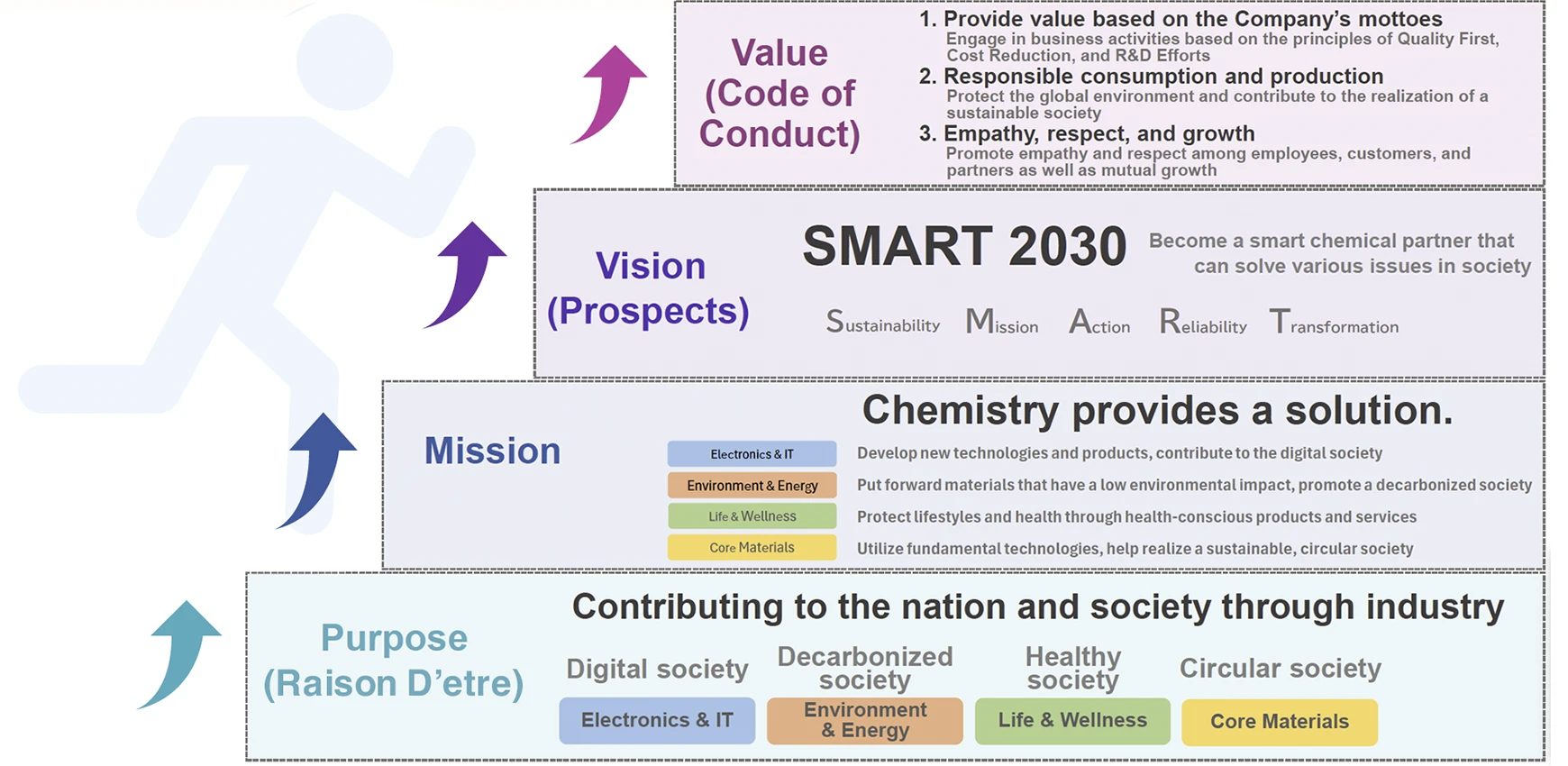
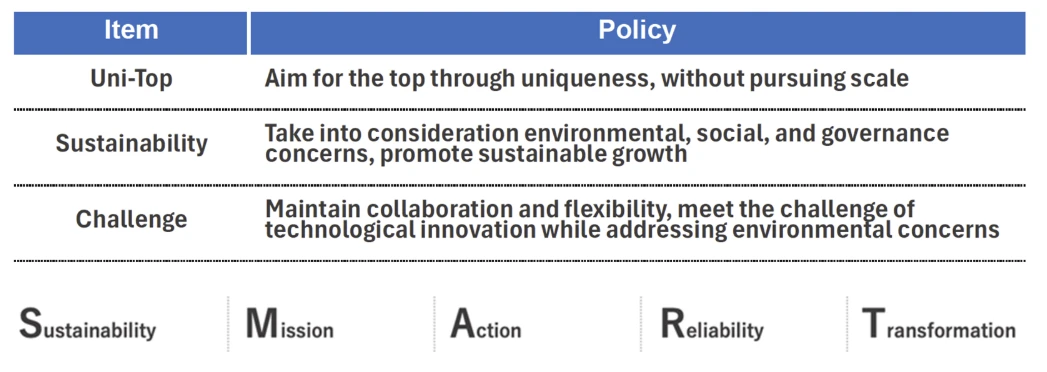
Under the Company’s new medium-term management plan “SMART 2030,” DKS will work to further generate corporate value, put in place a code of conduct, and enhance its human resources. At the same time, the Company has identified the three key words “Uni-Top,” “Sustainability,” and “Challenge” as the framework for implementing reforms that will link efforts to maximize intangible assets, including human resources, with corporate growth.
to scroll
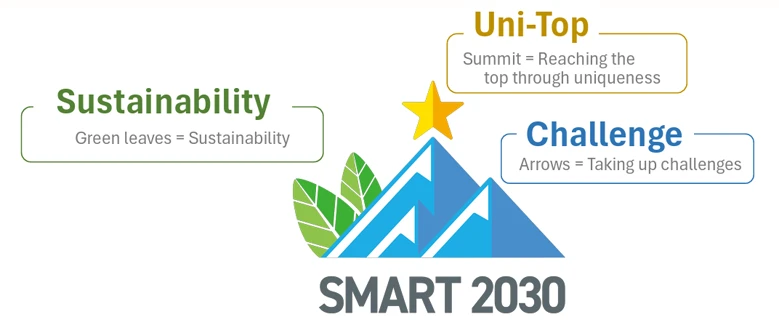
This framework is encapsulated in the “SMART 2030” logo, which depicts our efforts to reach the summit through uniqueness, ensure sustainability as illustrated by the green leaves, and take up challenges as portrayed by the arrows.
2. Scenario Targeting 2030
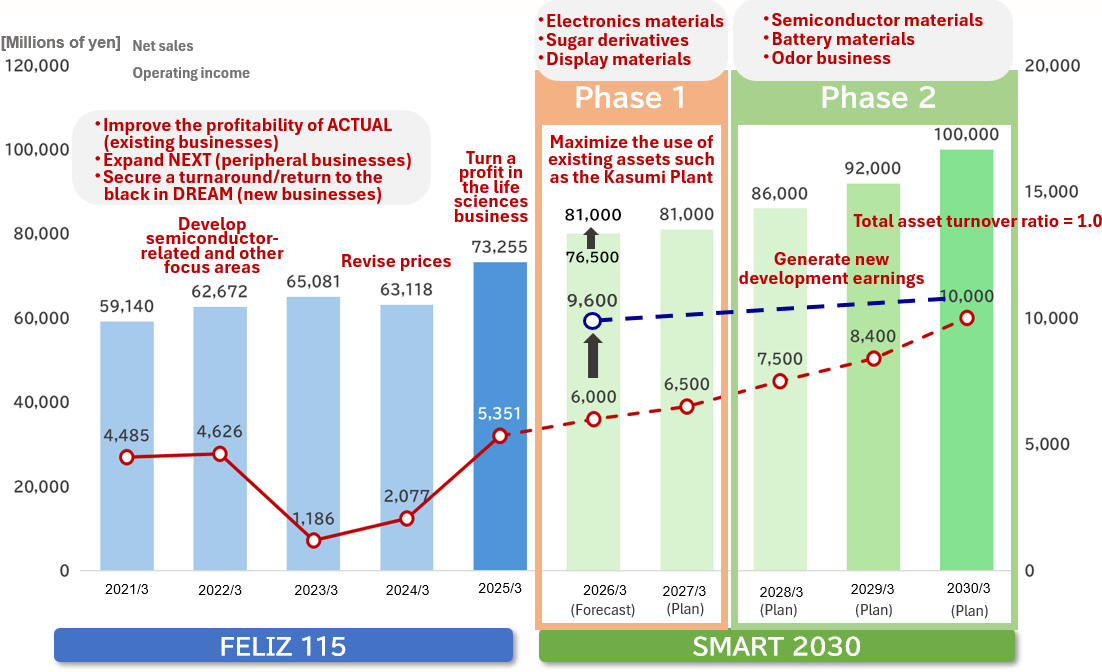
SMART 2030 Roadmap
The first two years of “SMART 2030” are designated as Phase 1 and the latter three years as Phase 2. Ultimately, the aim is to secure net sales of ¥100.0 billion and an operating income of ¥10.0 billion in fiscal 2029, the fiscal year ending March 31, 2030.
to scroll
Basic policy
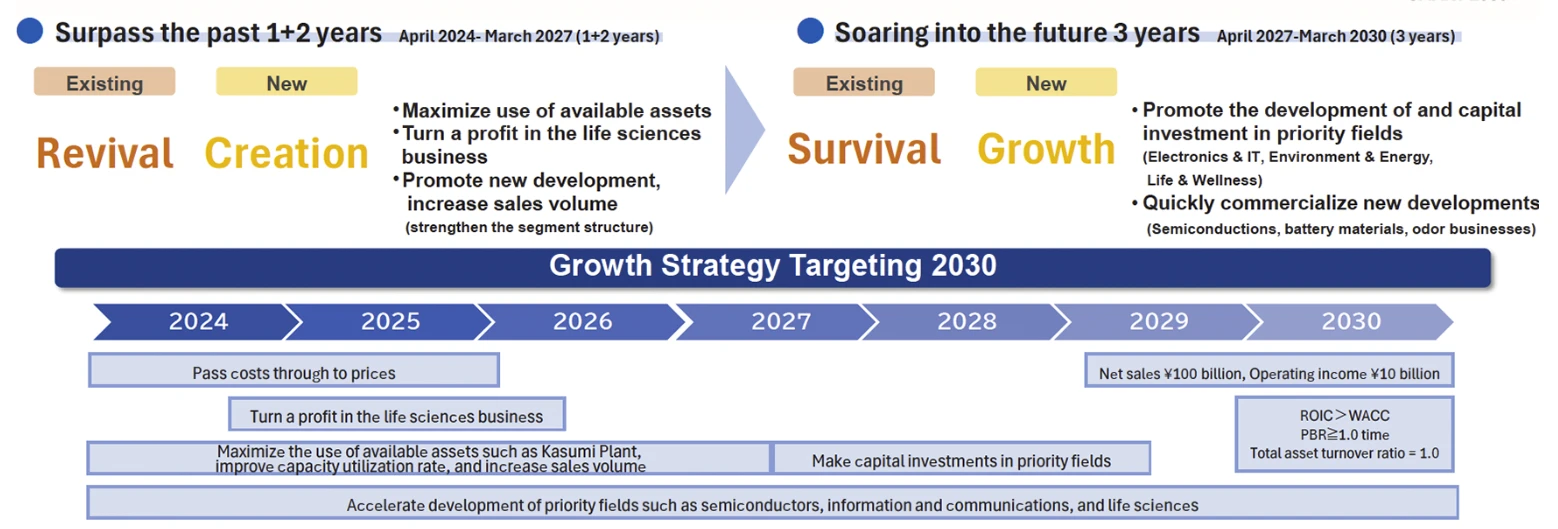
- As far as the Company’s organization is concerned, DKS will adopt a business headquartersbased system and establish business divisions by field, thereby integrating the sales and research functions. In addition to putting in place a system that can address customers’ issues and development themes in a timely manner, every effort will be made to engage in organizational operations that clearly define business responsibilities.
- DKS will also establish the Production Technology R&D Division and Kyoto Central R&D Division as organizations that report directly to management in a bid to accelerate efforts aimed at strengthening R&D. Energies will be directed toward shortening development periods while increasing business efficiency and competitiveness by classifying themes to be tackled into short, medium, and long-term.
- Moreover, DKS will work to increase labor productivity by introducing a new personnel system. We will build an evaluation system through which performance is assessed in a fair and equitable manner. We will also focus on human resource development to ensure that employee growth leads to corporate growth. As a part of these endeavors, we will foster a corporate culture that recognizes employees who actively take on challenges.
3. Growth Strategy Targeting 2030
to scroll
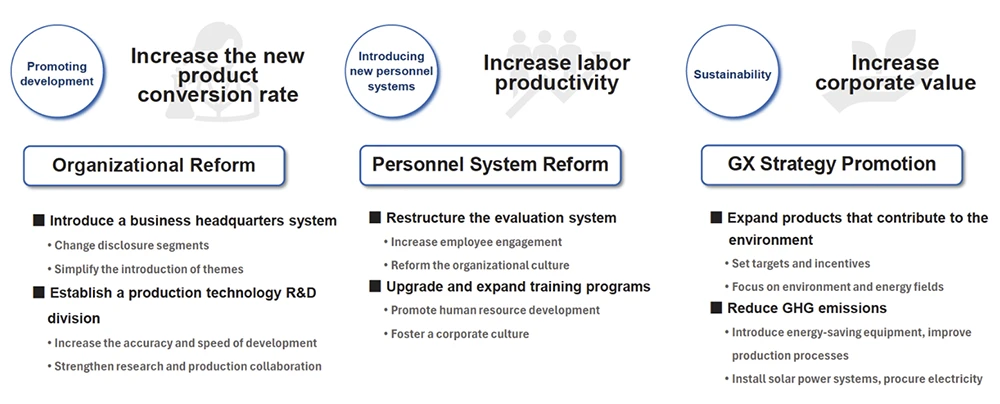
Non-Financial Strategy
(1) Stakeholder engagement
- Promote constructive dialogue between investors and management (Company briefings and plant tours, etc. at least 4 times a year)
- Enhance shareholder returns
- Upgrade and expand disclosure, increase awareness
(2) Promote ESG and sustainability strategies
- Expand products that contribute to the environment
- Promote a GX strategy to help realize a decarbonized society as well as measures aimed at reducing environmental impact
- Actively disclose non-financial information on a variety of issues, including climate change, human capital, and intellectual property
(3) Measures to improve employee engagement
- Overhaul personnel systems (job grades, assessment, pay)
- Develop framework and educational programs to foster career development
- Review in-house awards systems
- Implement measures based on the Health & Productivity Management strategy map (maintain and improve employee health)
(4) Increase labor productivity by promoting DE&I
- Reallocate management resources in a bid to optimize the direct ratio
- Acquire specialist human resources by establishing diverse recruitment methods
- Achieve a female manager ratio of 15% (2030 target)
Management Objectives
to scroll
| FELIZ 115 | SMART 2030 | ||
|---|---|---|---|
| [Results] FY2024 (2025/3) |
[Phase1] FY2026 (2027/3) |
[Phase2] FY2029 (2030/3) |
|
| Net sales | ¥73.2 billion | ¥81.0 billion | ¥100.0 billion |
| Operating income | ¥5.3 billion | ¥6.5 billion | ¥10.0 billion |
| Operating margin | 7.3% | 8.1% | 10.0% |
| Profit attributable to owners of parent | ¥2.5 billion | ¥3.5 billion | ¥5.0 billion |
| Total asset turnover ratio | 0.76 | - | 1.0 |
| ROE | 6.9% | 8.0% | 10.0% |
| ROIC | 5.2% | 5.5% | 8.0% |
| R&D expenses to sales ratio (consolidated) | 5.1% | 5.3% | 5.3% |
| New product conversion rate (non-consolidated) | 3.9% | 12.0% | 25.0% |
| Labor productivity (non-consolidated) | ¥2.2 million/person | ¥4.7 million/person | ¥9.7 million/person |
| Reduction in GHG emissions (compared with 2013) | 16.4% reduction | 18% reduction | 30% reduction |
3-1. Growth Strategy Targeting 2030
—Topics—
to scroll
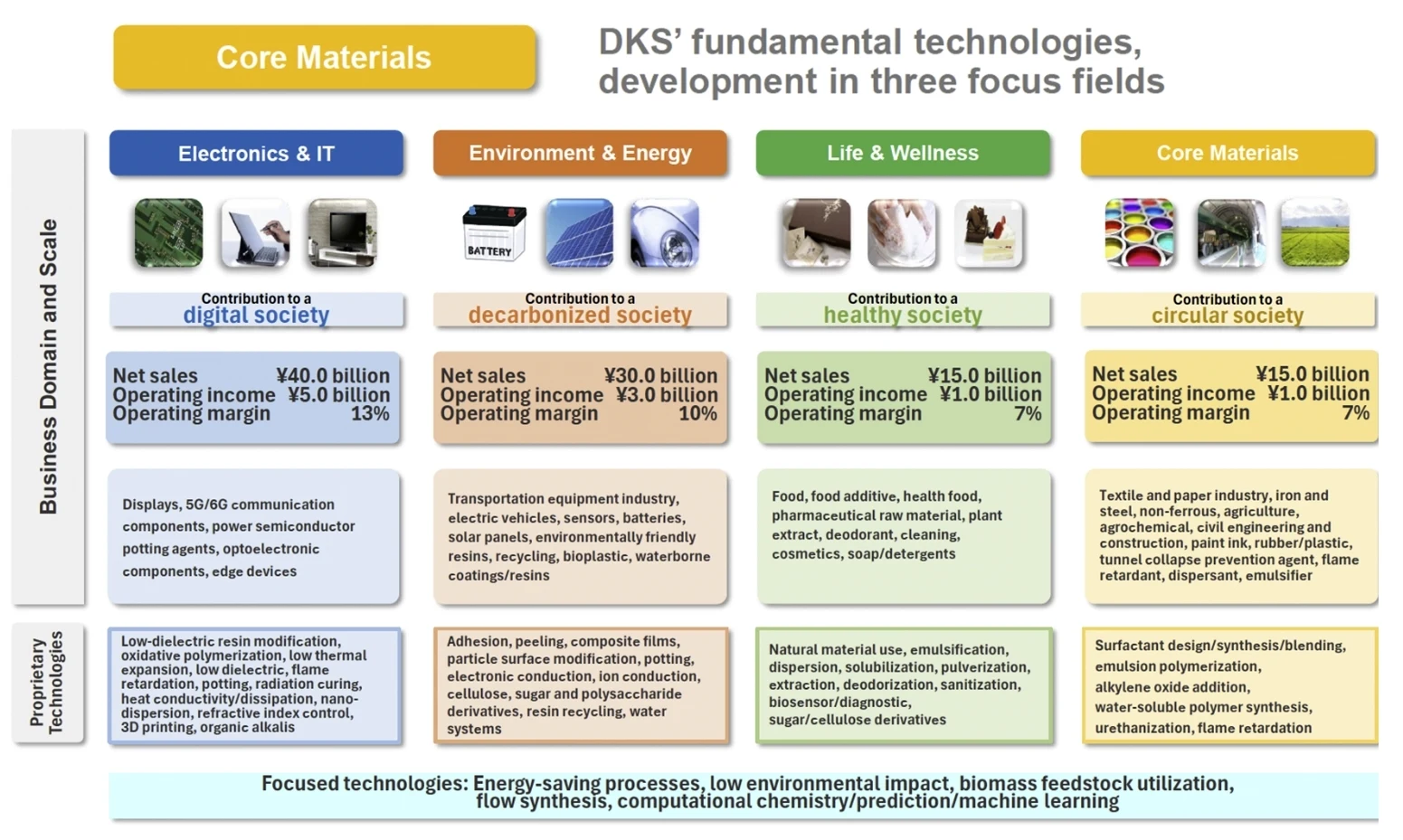
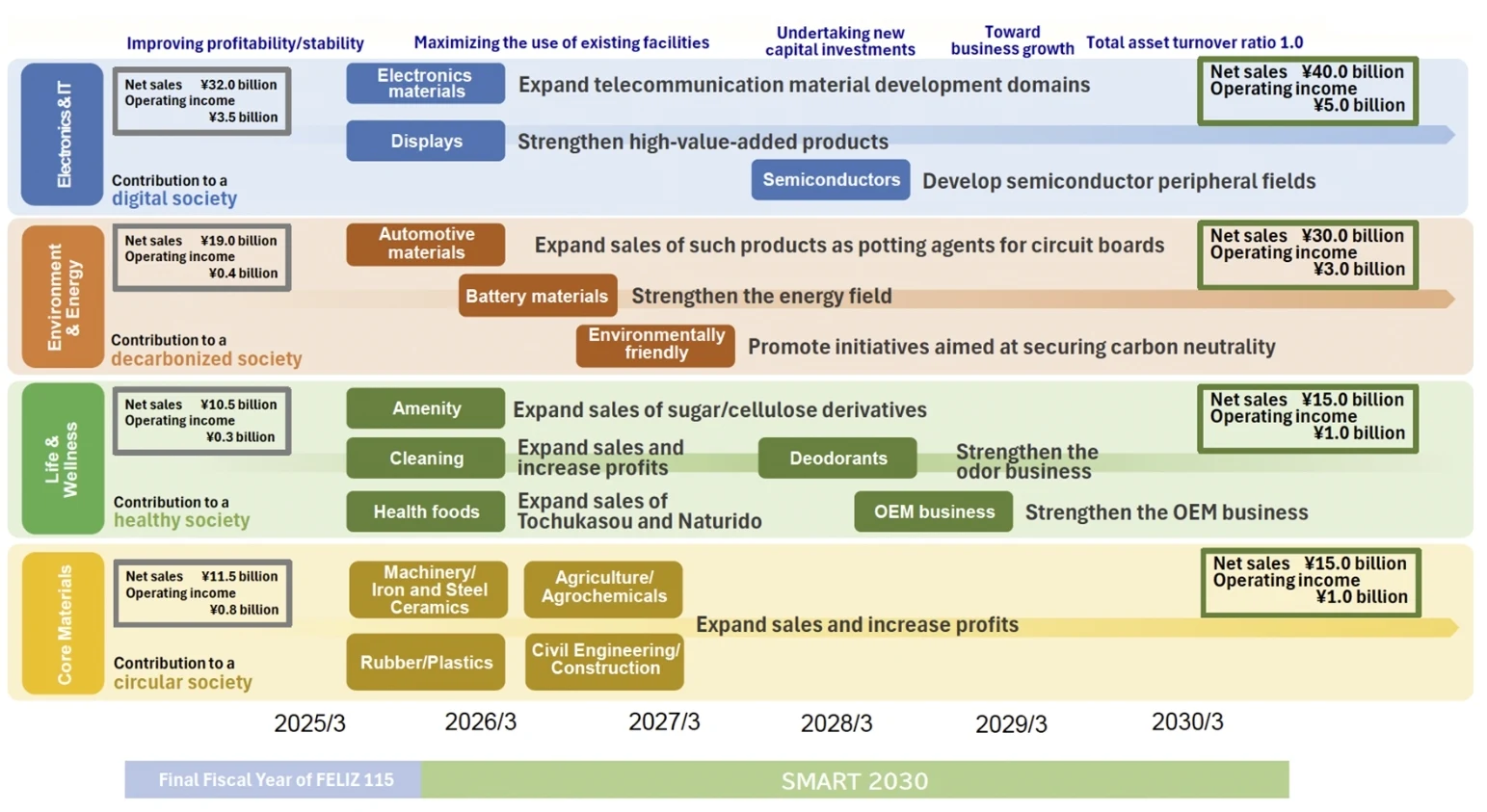
3-2. Growth Strategy Targeting 2030
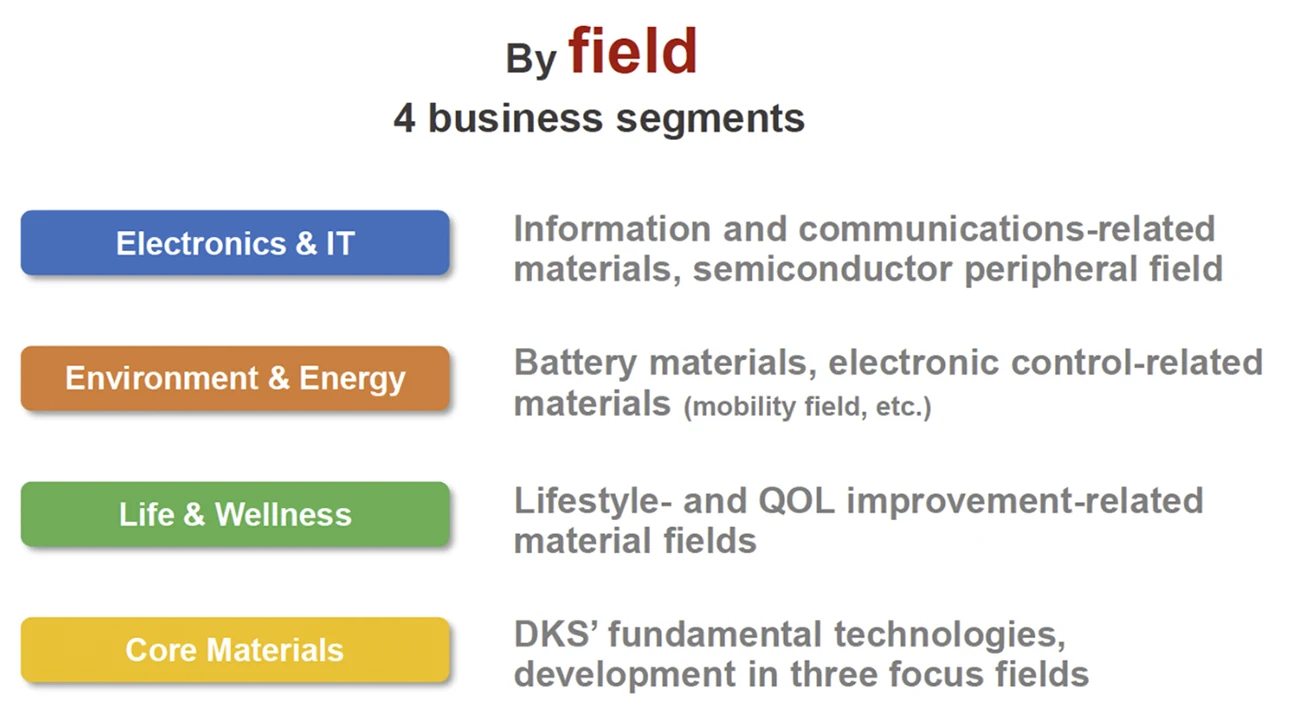
—4 business segments—
With a history that spans over 115 years, our track record of providing materials to a wide range of industries is a major strength. Based on our proprietary technologies, exemplified by surfactants, we will work diligently to achieve the targets set for fiscal 2029 in each field of our business domains.
to scroll
to scroll
4. Sustainability
—Increase Corporate Value by Addressing ESG Issues—
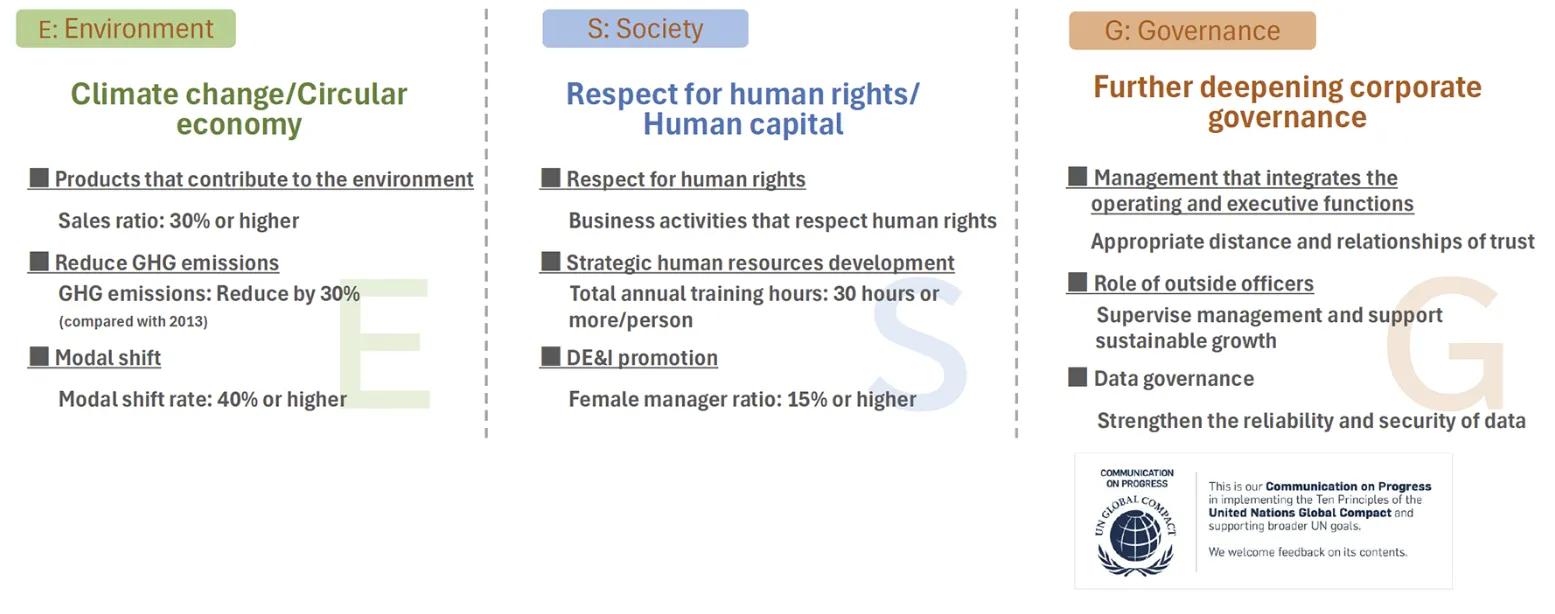
ESG Basic Policy
DKS looks to take on important ESG issues and to protect our environment and way of life while improving safety and levels of comfort. To do these things, we believe that “chemistry provides a solution” and shall contribute to the establishment of a sustainable society.
to scroll
5. Cash Allocation (FY2025-FY2029)
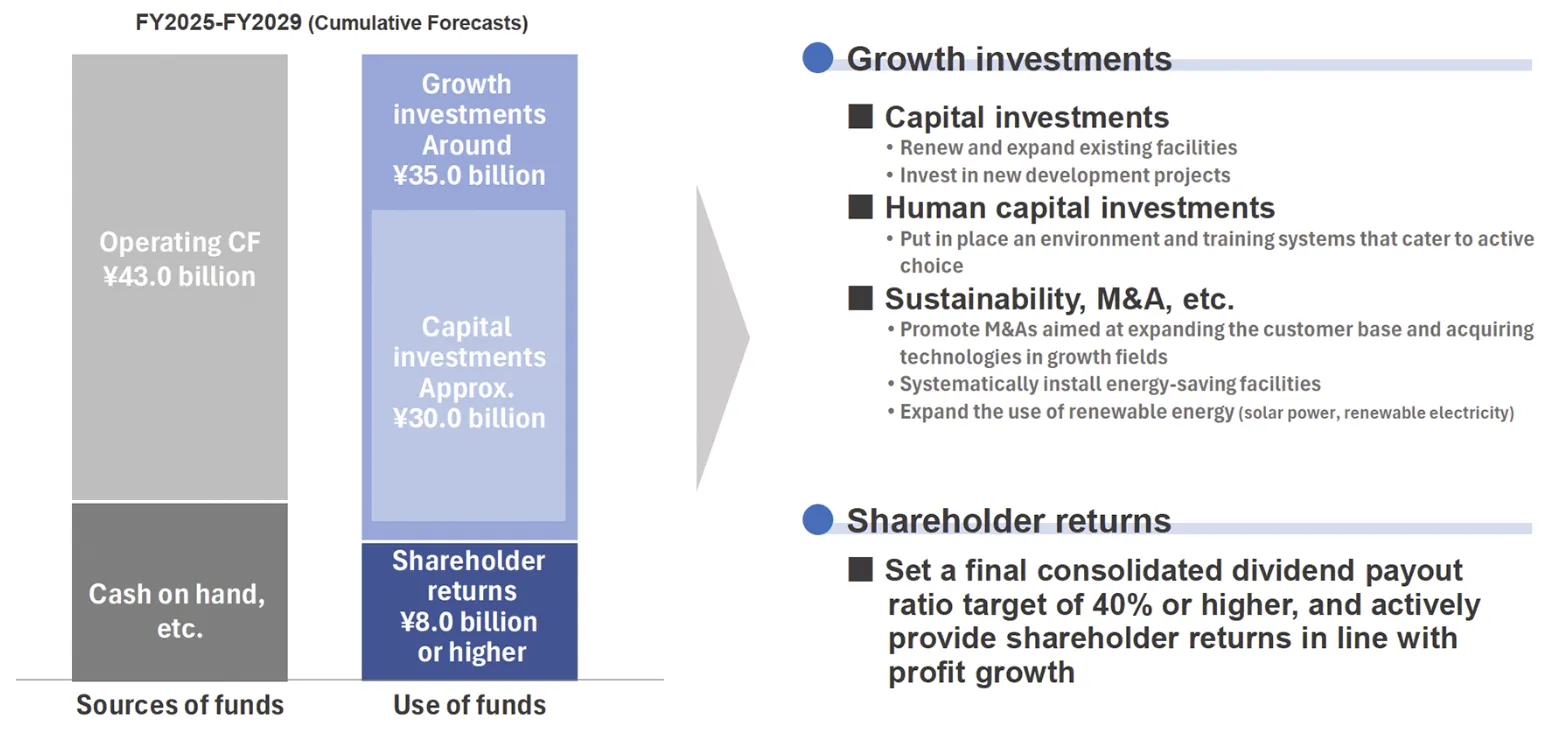
Undertake investments in growth (including R&D as well as human resources) in a bid to expand earnings, and work to enhance shareholder returns
to scroll
6. Capital Investment Strategy
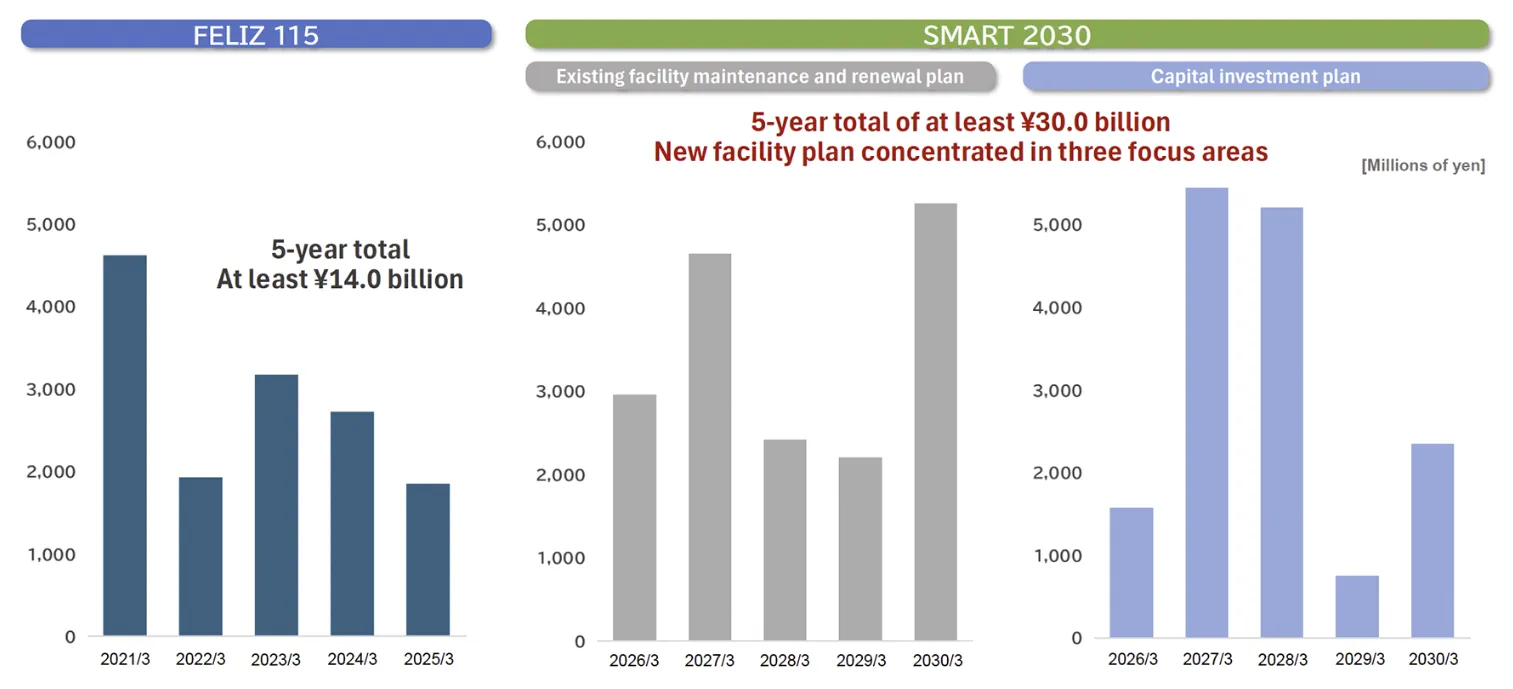
In addition to maintaining, renewing, and expanding existing facilities, undertake new development investments;
plans in place to undertake a cumulative investment of at least ¥30.0 billion over five years
to scroll
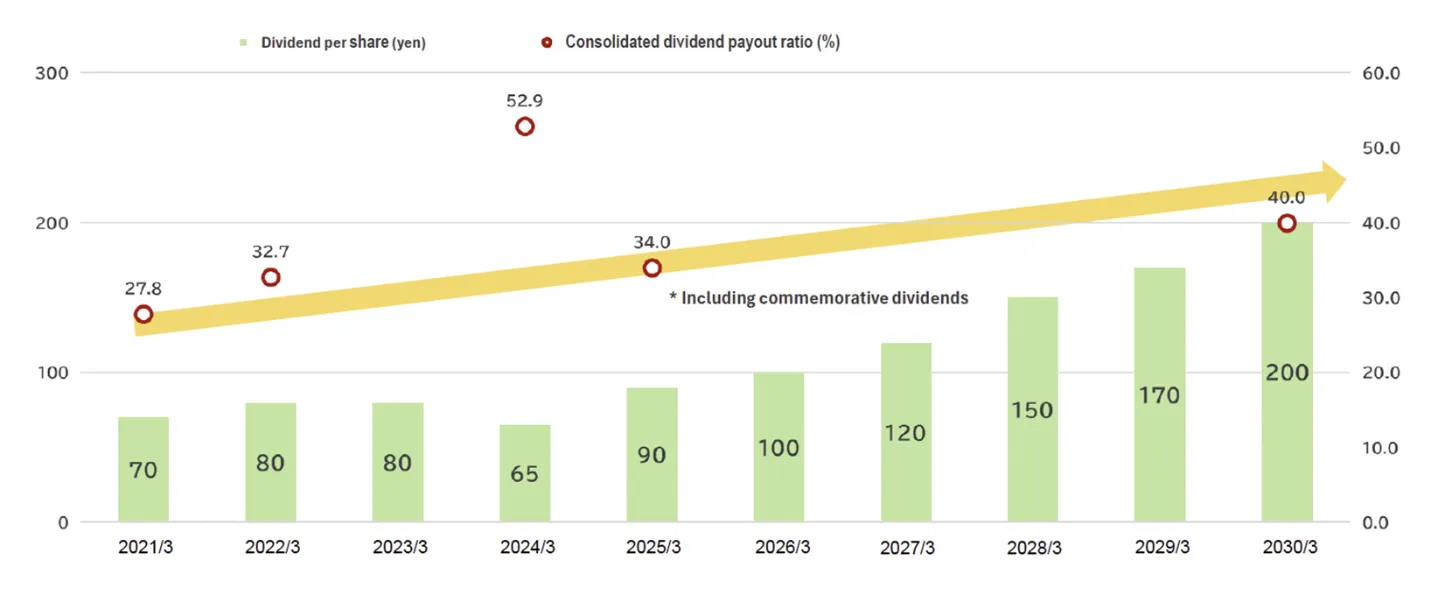
7. Shareholder Returns Policy
Dividend policy
- Secure the necessary internal reserves to fund future business expansion
- Set a final consolidated dividend payout ratio target of 40%, and actively provide shareholder returns
- In addition to profit growth, aim for long-term, stable dividend growth
to scroll