









History
Tradition and for the next generations
Introducing the history of DKS,
spanning over 100 years.
Founded–
- 1909
-
Business started at Ohno Kungyokudo
Anonymous association Ohno Kungyokudo Cocoon Unwinding Agent Department established
Launched Cocoon Unwinding AgentFounded as a manufacturer of oil agents
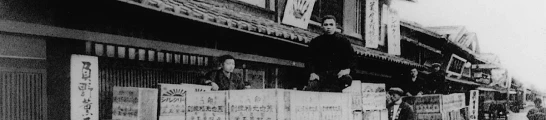
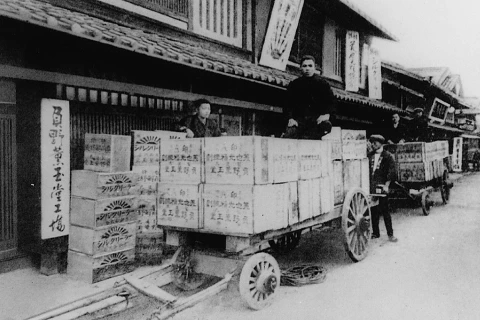
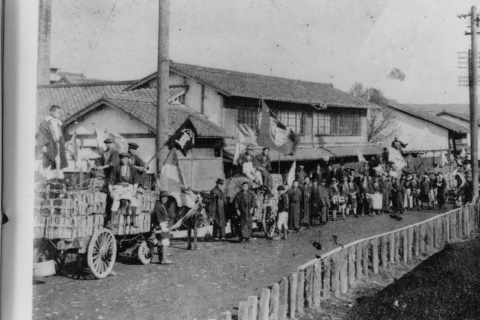
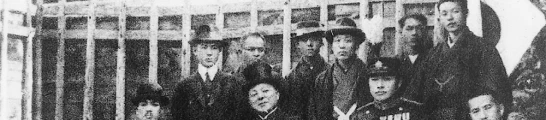
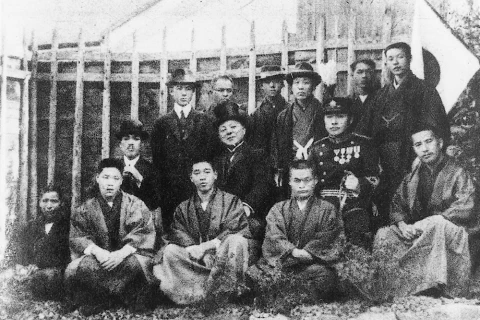
In 1909, the three founders, Kozaemon Ohno, Kakichiro Nakamura, and Mohei Ono, began producing a cocoon cleaning/unwinding agent, an industrial chemical used to wash raw silk cocoons, in a storage shed owned by the incense maker Ohno Kungyokudo. Later renamed “Silkreeler,” this product dramatically improved spinning productivity and contributed to establishing mass-production technologies in the silk industry. All manufacturing was done by hand, and as seen in the photograph, even distribution relied on horse-drawn carts. Human labor was at the center of everything. Mohei Ono traveled extensively to expand sales when he wasn’t at the factory manufacturing the cocoon cleaning/unwinding agent. Despite cramped factory space and shortages of equipment and materials, he continued experimenting to develop new products, supplying scouring agents, oil agents, and other chemicals to the textile industry, which was a core industry at the time.
- 1910
-
Launched MIYAKO scouring agent
- 1914
-
General partnership company Ohno Kogyo Seiyakusho established
Production of textile processing oil agent and soap started - 1915
-
Launched of Gembu Marseille Soap
Aiming to become a comprehensive chemical manufacturer
In 1915, the company released Japan’s first domestically produced soap for the textile industry, “Gembu Marseille® Soap,” entering a market that had previously relied entirely on imports. Thanks to Mohei Ono’s meticulous preparation, it took just over a year to establish the production method, make capital investments, and bring the product to market. The company song even includes the lyric “Marseille Soap as our foundation,” reflecting Ono’s strong attachment to the product.
Gembu Marseille Soap is still sold today, and its consistent quality continues to be supported by many customers.
- 1916
-
Headquarters and Kyoto Plant relocated to Shichijo-Senbon Higashi, Shimogyo-ku
Launched MONOPOL SOAP, MONOPOL OIL, AGOL - 1918
-
Dai-ichi Kogyo Seiyaku Co., Ltd. established (Capital: JPY 500,000)
The source of our unique technologies

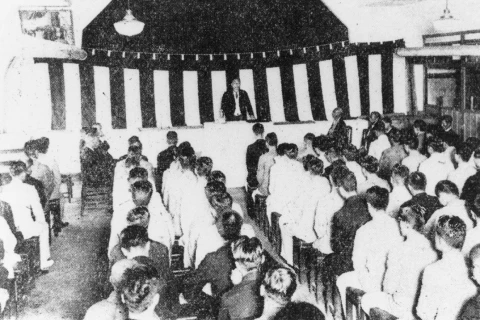
During the post-World War I recession, the driving force that helped the company overcome the economic crisis was its unwavering management stance, placing priority on research. A testing laboratory was established in 1918, followed by the introduction of a research incentive system in 1919 and an inventor commendation system in 1920. These programs led to innovations and new patents, and demonstrated our commitment to the “R&D Efforts” pillar. In 2002, we introduced a patent reward system ahead of other companies, which continues to contribute to the development and creation of new businesses, such as today’s life sciences business.


1923–
- 1923
-
Cocoon Unwinding Agent renamed to SILKREELER
Shanghai representative office opened
First in-house newsletter publishedA corporate culture that values quality
In 1974, these activities were unified, and together with the “R&D Efforts” pillar of our corporate philosophy, we firmly established our reputation as a company built on technical excellence.
- 1926
-
Headquarters & Kyoto Plant relocated to Shichijo-Senbon Minami, Shimogyo-ku
- 1927
-
R&D Department established
Corporate song established - 1928
-
Gembu Marseille Soap won awards
- 1931
-
Shanghai Plant started operation
- 1934
-
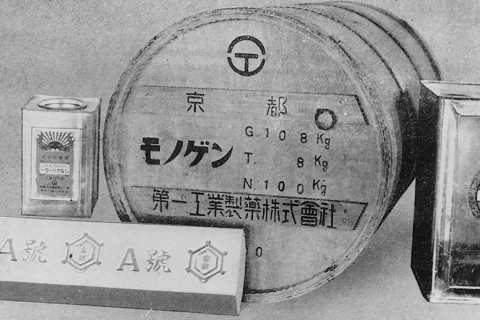
Launched a premium alcohol-based detergent (later MONOGEN)
First company newsletter publishedLaunched Japan’s first domestically produced premium
alcohol-based detergent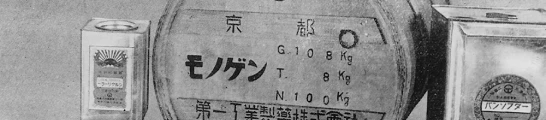
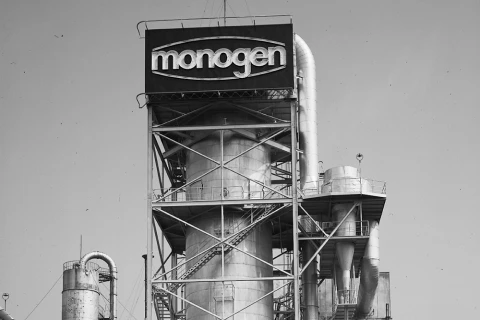
In 1934, the company launched Japan’s first domestically produced premium alcohol-based detergents, DKS No. 100 and DKS No. 300. DKS No. 300 proved effective for washing raw wool in the wool industry and as an auxiliary agent for scouring and dyeing in the rayon industry. In 1935, construction of a new plant began. The product was renamed twice, first to “Neogen” and then to “Monogen,” and grew into a widely loved brand.
- 1935
-
Launched a softener PANSOFTER and GENBU SHAMPOO for household use
- 1939
-
Yokkaichi Plant opened for production of MONOGEN and PANSOFTER
New Yokkaichi Plant established

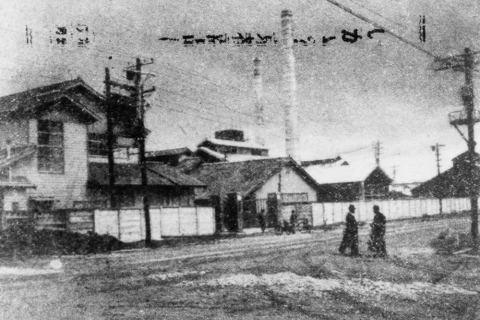
In 1939, the Yokkaichi Plant, the company’s second domestic production site, was established. Initially, its main operations were the distillation of sperm whale oil and the production of industrial Monogen and Pansofter. However, the outbreak of World War II created extreme difficulty in obtaining raw materials, and priority was given to military production, leading to a decline in the wool textile industry. Instead, rayon and staple fibers emerged, and Pansofter became an essential finishing oil agent for softening synthetic fibers, marking a strong start of production.


1949–
- 1949
-
Listed on the Stock Exchange Market (Capital: JPY 60 million)
- 1950
-
Launched synthetic thickener sodium carboxymethyl cellulose (CMC) CELLOGEN
- 1951
-
Development that laid the foundation for modern surfactants
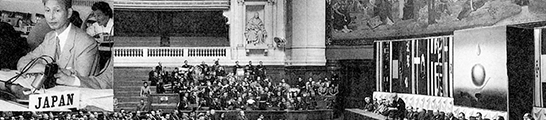
First World Surfactant Congress
We developed various prototypes of today’s surfactants, including the nonionic surfactant Noigen® and the cationic surfactant Catiogen®.
When high-performance and affordable electric washing machines became widely adopted in households in 1953, synthetic detergents spread rapidly as well.
In 1954, then-CEO Yutaka Tanaka attended the First World Surfactant Congress held in France as Japan’s representative and delivered a presentation.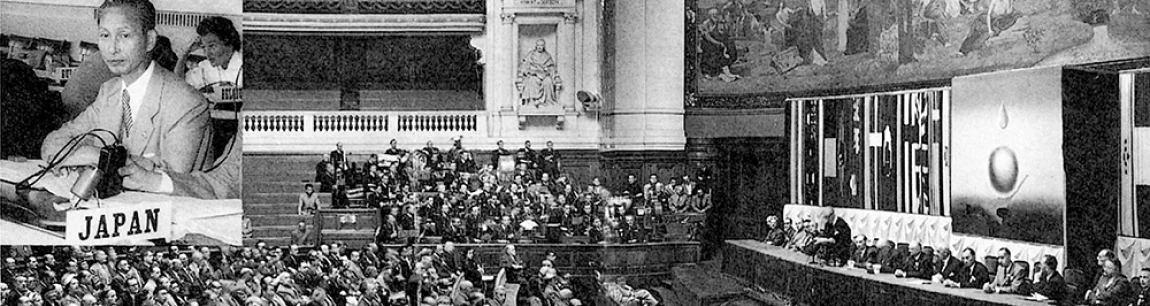
- 1952
-
A heavy oil combustion-driven parallel flow dryer for MONOGEN installed at Tokyo Plant
- 1953
-
Nonionic surfactant NOIGEN production started at Kyoto Plant
- 1956
-
A counter-flow spray drier installed at Kyoto Plant
Synthetic detergent automatic packing machine installed
Capital: JPY 450 million
Launched Japan's first hollow granular synthetic detergent ALCO - 1958
-
Business cooperation started with Royal Dutch Shell (UK)
- 1959
-
Yokkaichi Chemical Co., Ltd. established for production and sales of nonionic surfactants

1960–
- 1960
-
Ohgata Plant opened and production of CELLOGEN (CMC) by solvent method started
Capital: JPY 750 millionEstablishment of a foundation for future growth

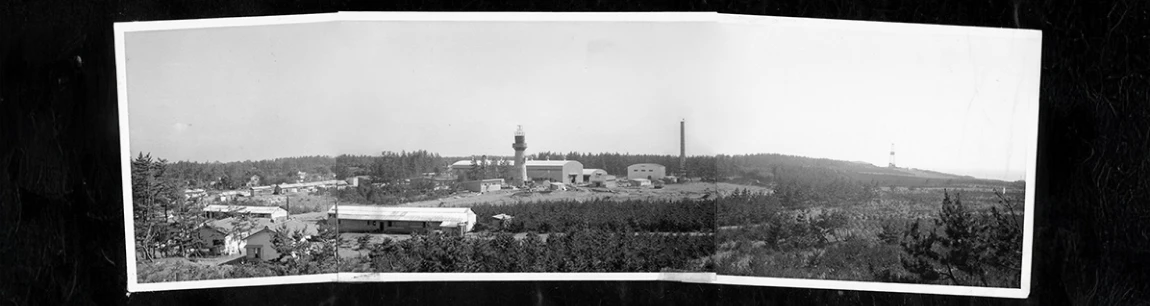
In 1959, we purchased 86,000 square meters of land in Ohgata, Niigata Prefecture. In 1960, Japan’s first large-scale CMC (sodium carboxymethyl cellulose) plant using the solvent method, the “Cellogen” production plant, was constructed. Strong sales supported the construction of the second and third plants. With the completion of the fourth plant in 1980, annual production capacity for high-grade CMC reached 15,000 tons. The product grew into one that supported a wide range of applications.
- 1961
-
A counter-flow spray drier additionally installed at Kyoto Plant
Capital: JPY 1.3 billion - 1963
-
Polyether production facilities installed at Yokkaichi Plant
Polyurethane business started - 1964
-
Nippon Teepol established
- 1966
-
"Softened" all synthetic home detergents (first among Japanese manufacturers)
Launched home laundry detergent ALCO COLOR
Dai-ichi General Co., Ltd. established with General Mills - 1967
-
Business cooperation started with Mitsuwa Kasei

1969–
- 1969
-
Flame retardant production facilities installed at Ohgata Plant
Launched flame retardant PYROGUARD
Ichikawa Plant opened
Nippon Levulose Co., Ltd. established
Nippon Sunhome established with Asahi Denka Kogyo and Mitsuwa Soap
Joint management of Dai-ichi Soap startedNippon Levulose established (absorbed in 2001 and became the Shiga Plant)
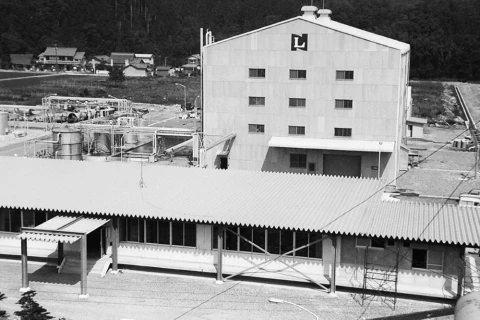
In 1969, to make a full-scale entry into the food sector, we acquired the company Levulose, a manufacturer and seller of fructose in Shiga Prefecture, and established a new company, Nippon Levulose. The pure fructose “Levulose” spread throughout the market for its many applications, becoming a natural low-calorie sweetener and alternative to artificial sweeteners, and a key ingredient in sports drinks and beauty-oriented foods.
- 1970
-
Launched sucrose fatty acid esters DK ESTER
- 1972
-
P&G Sunhome established
- 1973
-
Gembu Co., Ltd. established for sales of detergents and machinery for professional laundry
- 1974
-
Launched thermoreactive textile finishing agent ELASTRON
- 1976
-
Launched pigment dispersant MONOPET SB
- 1977
-
Production agreement with P&G Sunhome started
- 1978
-
Chin Yee Chemical Industries Ltd. established in Taiwan

1981–
- 1981
-
Launched radiation-curable monomer NEW FRONTIER
DKS International established
Tokyo Plant shut downBecoming a Leading Highly Functional Chemical Products Company
In the transition to high-value-added products, the Company enhanced research and development in the priority areas of “Resources and Energy,” “Electronics and IT,” “Food,Pharmaceuticals and Cosmetics” and new materials. The Company developed various highly functional surfactants and polyurethane products. In aiming to become a leader in highly functional chemicals, the Company began collaborating with companies in other industries as a way of addressing new needs. Moreover, the Company developed nonionic surfactants with a low environmental impact in collaboration with an overseas manufacturer.
- 1982
-
Launched polyurethane water dispersion SUPERFLEX
Dai-ichi Clean Chemical, Inc. and Dai-ichi Business Service Co., Ltd. established - 1985
-
Nippon Levulose renamed to Dai-ichi Kagaku Kogyo
- 1986
-
Kyoto Elex Co., Ltd. established as a joint venture with Dowa Mining Co., Ltd.
- 1987
-
K&D Fine Chemical Corporation established as a joint venture with Kawasaki Steel Corporation
- 1988
-
Dai-ichi Ceramo Co., Ltd. established for production and sales of CIM and MIM materials
- 1989
-
80th anniversary
Dai-ichi Kenkou Co., Ltd. established for production and sales of materials for construction & civil engineering - 1990
-
Capital: JPY 5,577 billion
Launched CFC/ethane-substituting water-based washing agent DK BE-CLEAR and electric insulating polyurethane EIMFLEX - 1992
-
Sisterna B.V. established in the Netherlands
Launched polymerizable surfactant HITENOL - 1996
-
P.T. Dai-ichi Kimia Raya established in Indonesia
Sucrose esters plant opened at Dai-ichi Kagaku Kogyo
Ozone Layer Protection Award granted by United States Environmental Protection Agency (US EPA) - 1998
-
Ohgata Plant CMC production ISO9002 certified
Joined Japan Responsible Care Council (JRCC)
2000–
- 2000
-
Yokkaichi Plant ISO9002 certified
Kyoto Plant shut down
Osaka Branch opened
Official website opened - 2001
-
Dai-ichi Kagaku Kogyo Co., Ltd. merged to DKS, ISO9002 certified
- 2002
-
All plants ISO14001 certified
Elexcel Corporation established for battery materials R&D
Chin Yee Chemical Technologies (Wuxi) Co., Ltd. established in China - 2003
-
All plants ISO9001 certified
First Environmental Safety Report published
Launched polyvinyl pyrrolidone (PVP) CREEJUS & PITZCOL - 2004
-
DKS (Shanghai) International Trading Co., Ltd. established in China
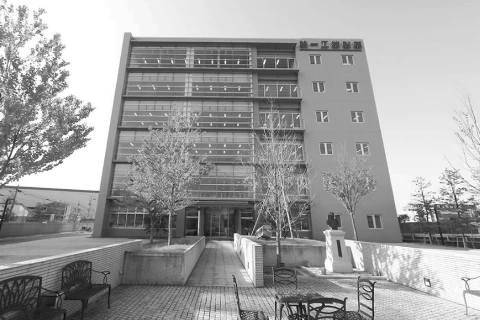
Building a business portfolio geared toward high profitability

In the transition to high-value-added products, the Company enhanced research and development in the priority areas of “Resources and Energy,” “Electronics and IT,” “Food,Pharmaceuticals and Cosmetics” and new materials. The Company developed various highly functional surfactants and polyurethane products. In aiming to become a leader in highly functional chemicals, the Company began collaborating with other industries as a way of addressing new needs. Moreover, the Company developed nonionic surfactants with a low environmental impact in collaboration with an overseas manufacturer.
- 2005
-
Shuang Yi Li (Tianjin) New Energy Co., Ltd. established in China
- 2006
-
Capital: JPY 6.650 billion
R&D laboratories ISO9001 certified
Laboratories relocated to Kisshoin, Kyoto - 2007
-
Headquarters relocated to Kisshoin, Kyoto
- 2009
-
100th anniversary
Transforming the corporate structure for further growth
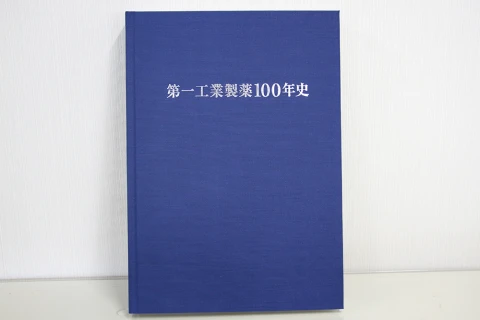
In 2009, the 100th anniversary of our founding, the Company started a six-year management plan with the aim of qualitative change and promoted the transition to a business division system, management infrastructure development and nonpetrochemicals, thereby strengthening our financial position. The Company transformed its corporate structure placing emphasis on the DKS Credo and created a platform for further growth.

2011–
- 2011
-
Capital: JPY 7.14 billion
Yokkaichi Chemical became 100% subsidiary
Tokyo Branch relocated to Kyobashi, Chuo-ku - 2012
-
Tokyo Branch changed to Tokyo Headquarters
- 2013
-
English company name changed from Dai-ichi Kogyo Seiyaku Co., Ltd. to DKS Co. Ltd.
Launched cellulose nanofiber (CNF) RHEOCRYSTA - 2015
-
Capital: JPY 8.90 billion
Kasumi Plant opened at Yokkaichi Branch
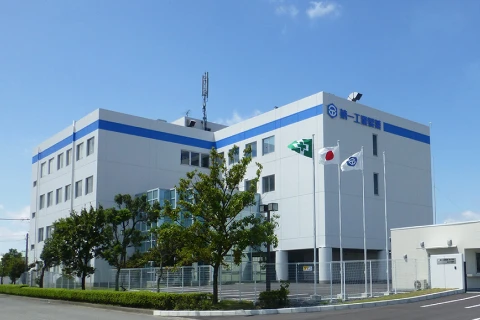
Dai-ichi Kogyo Seiyaku (Singapore) Pte. Ltd. established in SingaporeConstruction of a new plant in the Kasumi area of Yokkaichi, Mie Prefecture
In 2009, the 100th anniversary of our founding, the In 2015, the Company formulated a five-year plan for new value creation, and in the same year, the new Kasumi Plant was constructed in Yokkaichi of Mie Prefecture, as a mother factory with the aim of integrating production, sales and development functions, preparing the foundation for a second renaissance.
Third founding period: Establishment of a new group logo symbolizing the company’s leap forward
A new group logo was created as a symbol of globalization. Its design represents our aspiration to grow into a 100-billion-yen company.
- 2016
-
First DKS Report (annual report) published
- 2017
-
Safety Education Center established at Kasumi Plant
- 2018
-
Biococoon Laboratories, Inc. became subsidiary
IKEDA YAKUSOU CO., LTD. became subsidiaryLife Sciences Business Launched,
Full-Scale Shift to DREAM Businesses
With its full-scale entry into the business field of life sciences in 2018, the Company acquired Biococoon Laboratories, Inc. and Ikeda Yakusou Co., Ltd. as wholly owned subsidiaries. As an initiative that links achieving healthy longevity and revitalizing communities, this has become the foundation for building the future that our Company is focusing on, together with the electronics / information and environment / energy fields.
- 2019
-
Tanakura Plant opened
2020–
- 2020
-
DKS was selected as a "Health & Productivity Stock" for the first time
- 2021
-
Announcement of Naturido, a new active ingredient expected to improve cognitive function
- 2022
-
Launched TENCHUKASOU (health food)
- 2023
-
Launched Kainou Tochukasou (food with functional claims)
Launch of a functional food product and a deodorizing and disinfecting spray

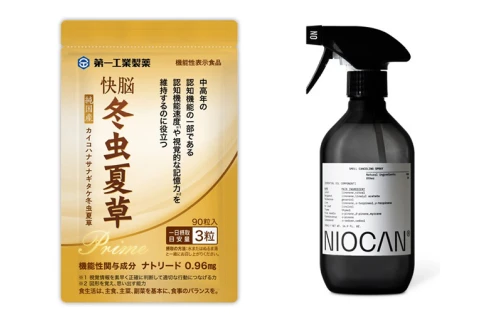
In 2023, we completed the notification for a functional food product made with silkworm cordyceps containing Naturido. It has been reported to help maintain visual memory and cognitive processing speed. In the same year, we launched Niocan®, a deodorizing and disinfecting agent developed based on technology owned by Gembu Co., Ltd., effective against a wide range of odors found in everyday living spaces.
- 2024
-
Launched smell canceling spray NIOCAN
Headquarters relocated to Hachijo Gate, Kyoto Station
